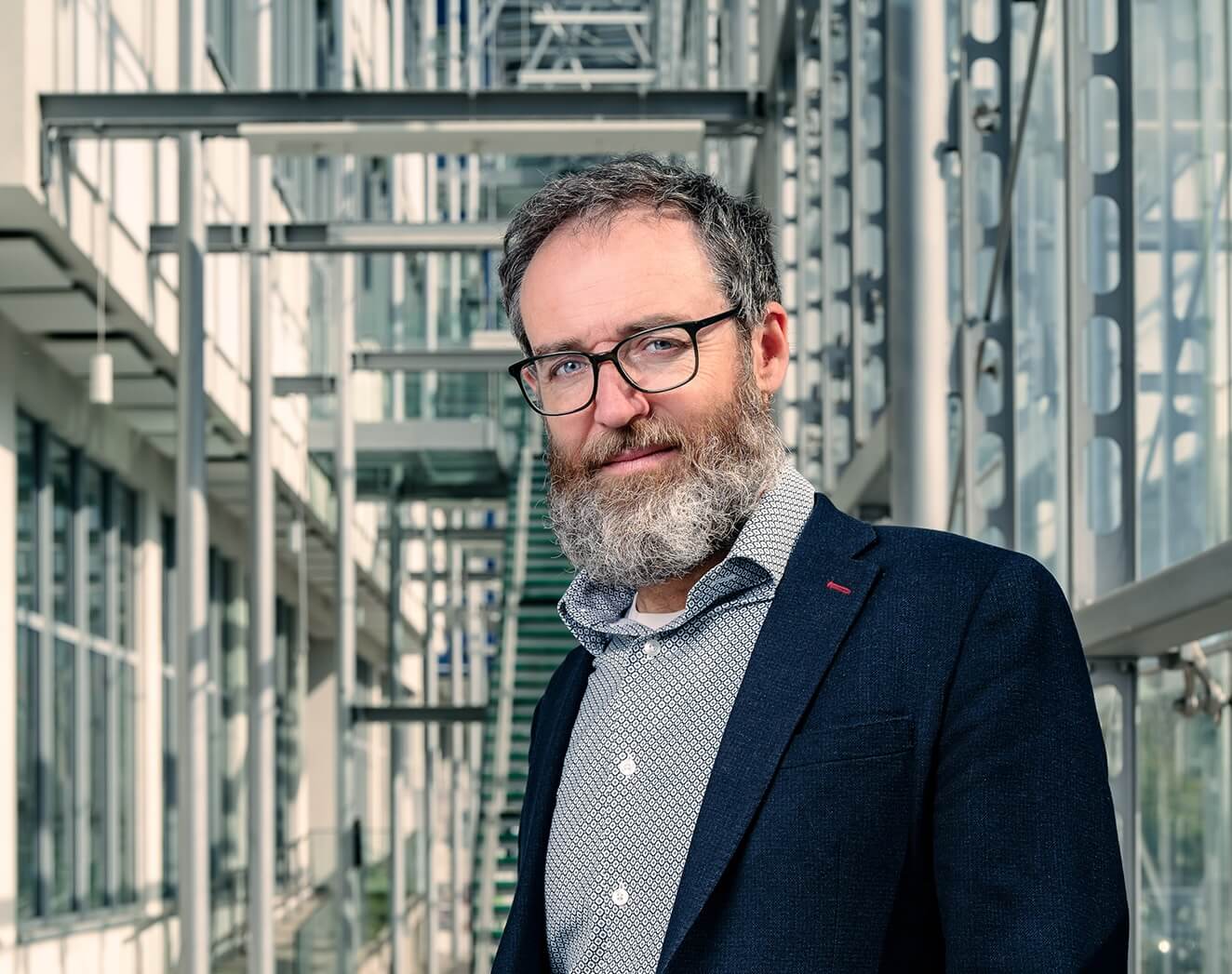
After thirteen years, the CEO who left the company at a time when it was fighting for survival has returned to the helm of Tatra. Today, he faces the opposite pressure. There are more orders, especially from the defense industry, than the automaker can cover in terms of capacity. Kristijan Fiket, CEO of TATRA TRUCKS, intends to implement a large investment plan with his team, which aims for a capacity exceeding 3,000 cars per year in 2028 and a leadership position in special vehicles on the European market. To do this, he needs about seven billion crowns and currently a few hundred people for production.
Your appointment as CEO of TATRA TRUCKS this January was a repeat of the same thing after thirteen years. When you worked here in 2010–2012, it was not exactly the best period for the company. So, “you can’t step into the same river twice” probably applies here more than anywhere else. Where did you notice the biggest difference?
When I left Tatra 13 years ago, it was a fight for survival. There weren’t enough orders and I was struggling with costs that you can only cut to a certain extent, but then it’s no longer possible. The strategy of the owner at the time didn’t make sense to me. Now the situation has changed, thanks to CZECHOSLOVAK GROUP (CSG, majority owner of TATRA TRUCKS, the other owner is PROMET GROUP – editor’s note), which is a strong group whose owner (Michal Strnad – editor’s note) is very involved here personally. Now we have another problem: we cannot produce as many cars as we are able to take orders, we do not have sufficient production capacity. I believe that with the current owners we will be able to expand the capacity and produce more.
What has unfortunately not changed in Tatra over the past 13 years is the halls and machinery – which is related to the capacity problems.
Do you have any tasks from the owners, what you should achieve in a certain horizon? Or have you set yourself a goal?
The owners, especially CSG, are very demanding. Today we produce less than two thousand cars a year and we are talking about three thousand by 2028, it could be a little more. We want to be the European leader in the production of special cars.
What is the core of the strategy that is supposed to help you increase production volume? How will you increase capacity?
For example, by cooperating more with other companies. So far, we have done most of the things ourselves, now we are starting to start cooperations that will free up capacity.
On the contrary, didn’t Tatra have the opposite strategy before, that it wanted to provide everything itself and be as self-sufficient as possible?
Our customers around the world want, if possible, to receive not only chassis, but also Tatra engines and transmissions. But that does not mean that we have to produce all the components ourselves. Both in the Czech Republic and elsewhere in Central Europe, we can cooperate with companies that will manufacture them for us, and the final assembly will take place in Tatra. We would like to transfer about 120 thousand hours per year to cooperation. Since we will perform about 1.4 million standard hours in Tatra next year, you can see that this is only a small part, we still want to provide the vast majority ourselves.
Are you successful in attracting companies to cooperate in this way?
Not very much yet. I hereby call on companies that would like to cooperate with us in machining, turning, milling, grinding and other activities to apply.

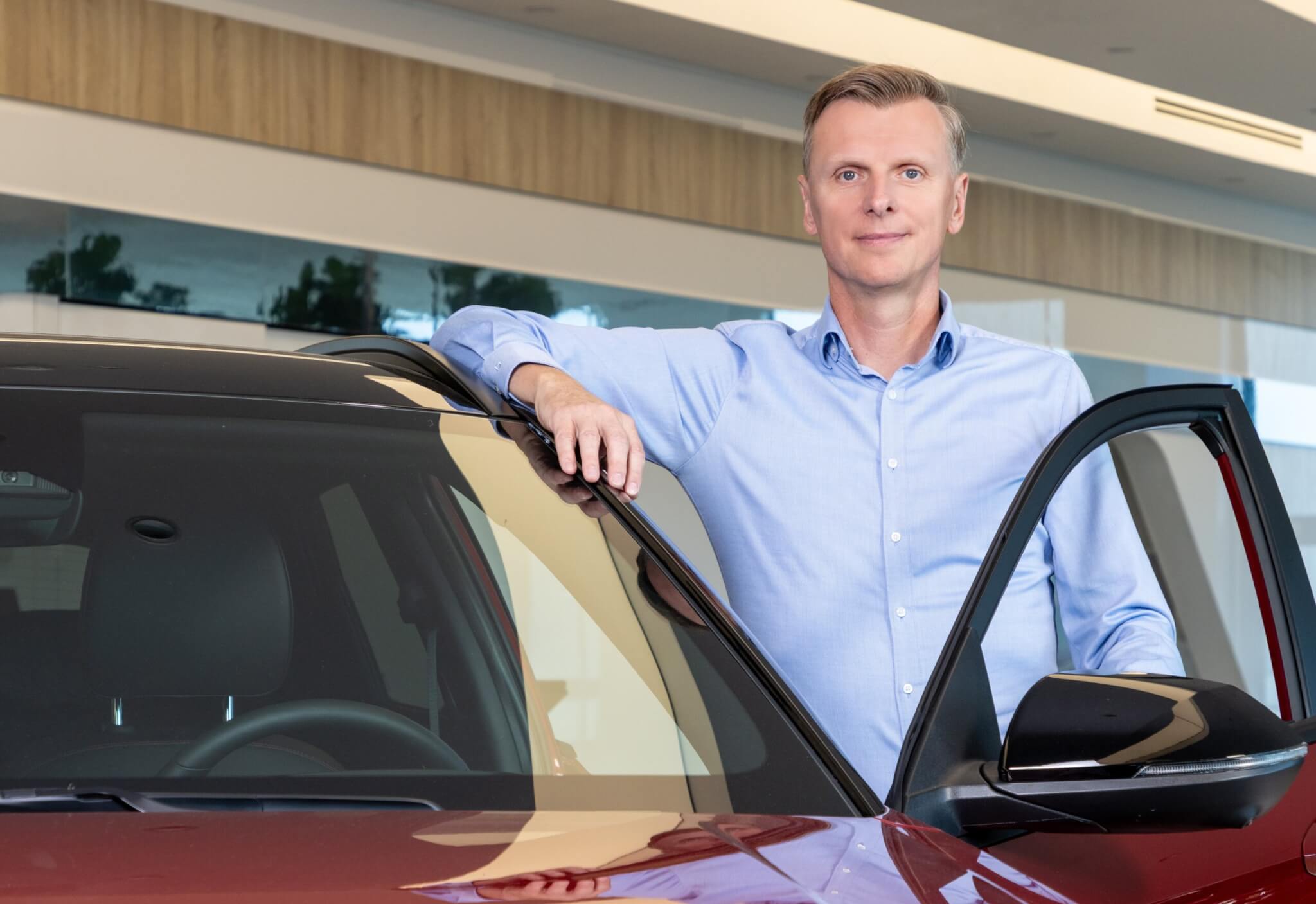
We are striving for closer connections with other partners in the industry. I hereby invite companies that would like to cooperate with us in machining, turning, milling, grinding and other activities to apply, says Kristijan Fiket. | Photo: Jiří Zerzoň
Investment as a path to higher capacity and greening
In the summer, you announced a large investment plan worth more than seven billion crowns. What does it entail? I assume that the goal is also to increase capacity.
It is a whole complex of measures aimed at enabling Tatra to produce efficiently. The entire production needs to be “brought under one roof”. Today, for example, axles are transported from one place to another by tractor, which unnecessarily prolongs production. We need to build a new hall in which we concentrate all machining, I estimate it at 500 to 550 million crowns. New technologies, lathes, milling machines, grinding machines need to be purchased for this hall, which will cost an estimated 1.8 billion crowns.
Will these be the most modern machines available on the market for such purposes? Or do you even need some special ones, made to measure?
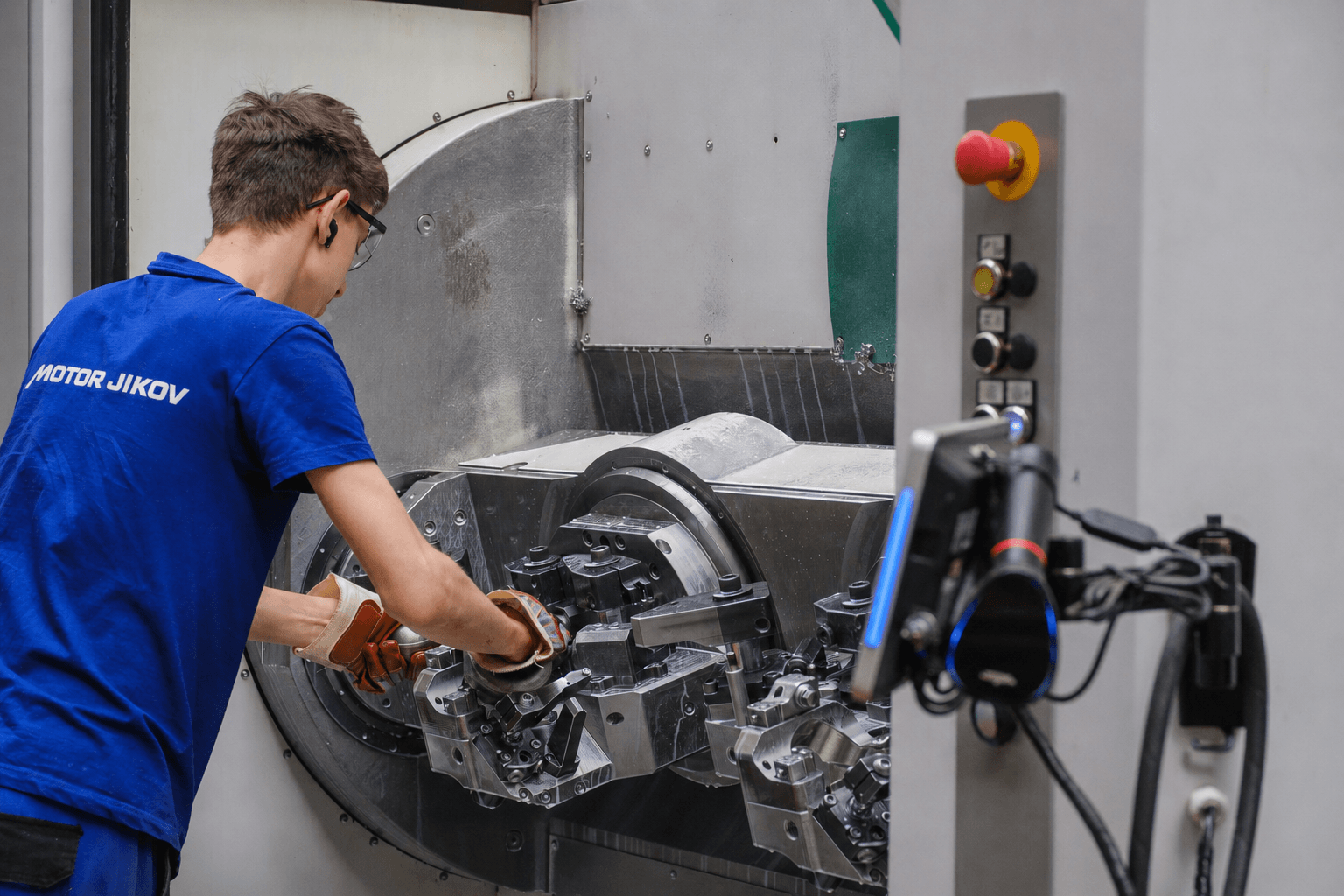
They will be modern CNC machines, lathes, milling machines, but of the new generation, so they take much less time to machine and several of them can be operated by one person. This will also partially solve the problem of the shortage of people. We currently lack about a hundred machine operators.
What will the additional money be used for?
We need to build a new central warehouse, which is another 400 million crowns. Today, the warehouse is scattered throughout the factory, and it is difficult to locate individual items. We also need to invest 300 million crowns in diagnostics, 480 million crowns in a new KTL line for the paint shop. 2.8 billion crowns will be used to modernize TATRA METALURGIE and make it greener. More or less all the buildings need new roofs. And then other smaller things, all of which will add up to 7.3 billion crowns.
Has any of this started to be implemented yet?
Yes, last year we started purchasing machines, they were purchased for 400 million crowns, this year it will also be around 400 million. We are now finalizing the plan for next year and we are counting on purchasing machines for 600 to 800 million crowns. Next year we will start demolishing one historical building and then we will start working on a project that we call the Middle Wing. This will be a hall with an area of 17 thousand m2, where we want to concentrate all machining and assembly of aggregates, so that everything is under one roof.
According to the amount of necessary investments that you calculate, it seems that the machinery deficit at Tatra is really large.
Evaluate it yourself. If you look at the annual reports of some heavy truck manufacturers, you will find that they have depreciation at the level of three to four percent, some car manufacturers even five percent. Do you know how much Tatra has? 0.3 percent. The machines introduced in the 1970s are long past their zenith, which says a lot about their efficiency. Today we can have machines from the same manufacturers that are three generations younger. The operations that we do on four different machines, today’s machines can do at the same time and in a significantly shorter time.
But it is quite understandable that there was no investment when there was no high demand. Now we have to. But even after all the investments we are planning, our depreciation will only reach 1.2 percent.
You received a subsidy from European funds for the greening of the foundry and subsidiary TATRA METALURGIE. Are you receiving any other support in connection with the investments?
At the moment, we have no other support promised. 2.8 billion will go to the greening of the metallurgical operation, the subsidy represents 1.3 billion crowns, and we pay the rest. We have to start the implementation no later than January 2026.
“We can’t wait with investments. We can secure the funds with additional bank loans or a loan from the majority shareholder.”
This entire major investment project is to be financed from multiple sources, including bank loans and, among other things, a significant increase in share capital. Will the investments be made even if you fail to push through the increase in share capital?
Yes, we cannot wait with the investments. We can secure the funds through additional bank loans or a loan from the majority shareholder.
The end of the legendary T 815, the beginning of new series
Tatra is currently going through a turning point not only in terms of investments, but also in terms of its production portfolio. Some production is ending, new ones are starting up.
TATRA TRUCKS currently mainly produces the Tatra Phoenix model series for the civilian sector and the Tatra Force and Tatra Tactic for special and military purposes. The Phoenix series is intended for the civilian market, while the Force and Tactic are for the army, firefighters and rescue services. In addition, the company is engaged in the development and production of other special vehicles and custom-made chassis.
As you rightly say, the years 2023 to 2025 were and are marked by a complete change in the production portfolio in the sense that we modernized all key series. In addition, after 42 years, we ended production of the Tatra 815, which, however, after many modernizations no longer had anything in common with the original and was replaced in 2023 by the third-generation Tatra Force.
In 2024, we introduced the third generation of the Tatra Phoenix, and this year we concluded the renewal of our production portfolio by introducing the modernized Tatra 810M, the Tatra Tactic, at IDET in Brno.

In 2024, Tatra introduced the third generation of the Phoenix series. | Photo: Jiří Zerzoň
It was not just about modernizing the cars themselves, but together with Tatra Force we also launched a modernized line of our own air-cooled engines with electronic control, where we supplemented the existing eight-cylinder with a more powerful twelve-cylinder, both of which meet Euro 3 and Euro 5. At the same time, we came up with a new generation of axles with wheel reductions with the so-called true planet, which replaced the original 60-year-old and many times modernized axles.
When you think about what the factory had to handle during those two years – and this with increased demand for cars, it is clear that we have gone through a difficult period. From next year onwards, we will only produce new generations.
Are all the upgrades based on your own development?
Where the chassis, cabin and engine are from Tatra, then yes, it is completely our development.
For Phoenix, we take over the cabins, engines and transmissions from DAF based on a cooperation agreement (the cooperation began in 2011 and consists in the fact that TATRA TRUCKS manufactures chassis and DAF supplies engines and cabins for the Tatra Phoenix model range – ed. note). DAF has also undergone a generational change, from 2021 it has completely changed its product portfolio and introduced a new generation of vehicles with new cabins and modernized engines. So the new cabins and engines that we are now purchasing are DAF developments.
You said that the chassis, or rather the axles, have also been modernized. I assume that the unique concept that makes the Tatra an unbeatable off-road vehicle is still preserved: a central supporting tube and independently suspended swinging half-axles.
Yes, it is still a backbone supporting tube and swinging half-axles. The new axles help reduce consumption and increase load capacity.
There are only a few companies in the world that produce a truck with independent suspension, and a truck with independent suspension and air-sprung axles, and steered axles with a load capacity of up to 12 tons – the non-steered axles now have a load capacity of up to 16 tons. In this respect, we are unique in the world and we still see room for further improvement.
How are your vehicles doing in terms of software and safety systems?
As for Phoenix, we took over DAF technologies and modified them for our installation. For the Tatra Force, the third generation of which is also heading to Western markets, it goes without saying that it must meet all European standards. Even heavy off-road vehicles are no exception. So our vehicles are equipped with Euro 6 engines and have all the electronic safety systems that we have been preparing with suppliers such as Continental, Bosch or Valeo.
So are the ADAS systems comparable to those currently produced in passenger cars?
Yes. Since July 1st of last year, only trucks that have blind spot monitoring, lane keeping, so-called panic braking and other systems can drive in Europe. Unlike passenger cars, trucks are also required to be equipped with a rear-view camera.
From diesel to batteries to hydrogen – and beyond
What do you think about European legislation concerning the automotive industry?
Car manufacturers have the most problems with this, we are in a somewhat specific situation. We are among the manufacturers of trucks, which are also subject to emission limits and other legislation, but our production volume is far from reaching the volumes of our competitors. We have managed to push through certain reliefs in the EU for both small manufacturers and manufacturers of heavy off-road vehicles. So for us as a small manufacturer, Euro 7 will only apply from 2031, while for others it will apply from 2029.
As a small manufacturer of heavy trucks, we will probably also have reliefs for meeting CO2 limits. According to current legislation, large truck manufacturers must sell 45 percent of their vehicles as zero-emission vehicles in 2030, otherwise they will pay high fines. This is utter despair.
The fact that we are not subject to the strictest requirements today does not mean that we have given up on producing clean vehicles.
A few weeks ago, TATRA TRUCKS announced that, together with partners, it had started the development of a new hydrogen truck, the Tatra Force 6×4, which is scheduled for completion in mid-2028. However, this is not the first project in the field of fuel cell propulsion.
You are right, Tatra had already completed a prototype of a hydrogen vehicle two years ago – it is an 8×6 heavy dump truck with two hydrogen fuel cells, a battery and an electric drive. That was the very first electric truck in our history. And now we are continuing the project. We have received a European subsidy for it. Further development in the field of fuel cell vehicles is primarily aimed at municipal services, so it will be a three-axle vehicle with a load capacity of approximately 25 tons, it will have a non-driven front axle of a new design and an even lower Tatra Force cabin to make getting into the car as comfortable as possible.
Fuel cells are not the only alternative drive that you are testing.
Certainly not. In mid-November, we introduced the new battery electric vehicle Tatra Force e-Drive BEV 8×8, for the development of which we also received a subsidy. At the same time, we are testing a prototype with a hybrid drive Tatra Force e-Drive PHEV 8×8, i.e. a combination of a combustion engine and an electric motor, which we introduced in the fall of 2024. By the end of this year, we will also introduce an electric vehicle with a so-called range extender, which extends the vehicle’s range by recharging a discharged battery. Our philosophy is that Tatra can be electric, but it should “carry a power plant on board” so that the advantages of these vehicles are maintained in every situation.
So why are you also working on purely battery vehicles?
Because demand is starting to come in. It is mainly from the mining industry, we are currently registering demand from Australia, but also from mining companies in Europe. There is a certain logic to this, because, for example, recharging within a mine is not that big of a problem, it is easier than in a city.
It is known that large manufacturers already offer battery and hydrogen vehicles. Tatra is still only in the prototype phase. Isn’t it a mistake to say that there is demand?
To be honest, the demand is still more in the form of questions about whether we would be able to supply such cars. But of course, some large mining corporations have their own internal goals, as to how long they want to be climate neutral, so they are already buying such cars today, even if they cost two to three times the price of a car with an internal combustion engine.
For the sake of completeness, I must also mention that in addition to battery drives and fuel cells, we have also started cooperation on the development of a hydrogen-burning engine. We assume that, according to current European legislation, an engine is emission-free if it generates less than three grams of CO2 per kilometer – and a hydrogen engine can do that.
So what do you think is the future of heavy-duty transport in general? Fuel cells, batteries, hydrogen combustion?
If you look at our competitors, but this also applies to car manufacturers, everyone has a car with batteries, fuel cells and a hydrogen combustion engine in addition to traditional drives. No one knows today what the prevailing direction will be, the economy will decide.
If I could judge from my previous experience at Toyota, hydrogen should be the future. That’s what Toyota says, and they have always been right about everything in the past 50 years.
In my opinion, the combustion engine at the Euro 7 level should be retained, but of course my opinion is not decisive. We are here to keep the factory running and making a profit, and we cannot close our eyes to what is out there. That’s why I’m glad that we have the opportunity to try out all these technologies, even if it is very financially demanding for us as a small manufacturer.
“Tatra operates in a niche market. As soon as there is a gap in the market that Tatra could fill, we focus on it.”
Apart from the shift towards alternative drives, can we observe any new trends in the field of heavy trucks lately?
The main trends are set by European legislation, where we have to meet all the requirements, whether it is deliveries for the civilian sector, firefighters or soldiers.
Otherwise, TATRA TRUCKS is a bit specific, our biggest advantage is our unique concept. Like our competitors, we reduce consumption and increase operating efficiency, we reduce maintenance requirements. For military vehicles, we are introducing new axles with higher tonnage. As one of many, we now offer axles with a track width of up to three meters, which, in addition to military vehicles, are also used for fire engines.
Tatra is a manufacturer that some call a niche player, or perhaps more often, that it operates in a niche market. As soon as we see a hole in the market that Tatra could fill, we focus on it. That is why we have returned to the production of twelve-cylinder engines after 30 years, because military vehicles are becoming heavier and heavier, and the requirements for the performance of their engines are increasing. Until now, we have been buying more powerful engines, which has deprived us of one possible source of income. We are now also developing our own transmission with partners for these twelve-cylinder and eight-cylinder engines.
At the beginning of the interview, you said that your goal is to reach three thousand units by 2028. Last year, you produced and sold about 1,550. So do you expect demand to double in three years?
Demand is growing, today it is approaching ten thousand. In June of this year, we had to stop accepting orders for 2026. Military vehicles represent 80 percent of this. And while customers used to ask for 60 or 80 cars, today one customer wants, for example, a thousand or two thousand cars. Such orders then take four to five years to be implemented.
Four-fifths of production for the military, but “we don’t make weapons”
What part of the production currently goes abroad and what part stays in the Czech Republic?
Most of the products are exported. For civilian cars, it is around 50 percent, mainly for Ukraine, Australia and Germany, for military orders, 65 percent of the cars are exported mainly to Belgium and Ukraine. However, it varies for individual models. For example, we certainly sell more Phoenixes in the Czech Republic.
What will be the ratio between civilian deliveries and deliveries to the army for the whole of this year?
It comes out 80 to 20 in favor of defense. We sell fewer civilian vehicles because our capacities are occupied by military deliveries. This is also one of the reasons why we need to increase capacity – so that we can return to some 500 to a thousand civilian vehicles per year.
In connection with your company, we are talking about military contracts, but in reality TATRA TRUCKS does not supply any military vehicles directly to customers. Is that so? Explain the relationship between TATRA TRUCKS, TATRA DEFENCE VEHICLE (TDV) and TATRA DEFENCE SYSTEMS (TDS).
TDV is an independent company from the CSG group, and it has a subsidiary company, TDS, which is the exclusive supplier of Tatra chassis and vehicles for the Ministry of Defense of the Czech Republic, state-owned enterprises established by the Ministry of Defense of the Czech Republic and some other EU countries. As TATRA TRUCKS, we do not make any weapons systems, we have never produced them. We only produce chassis for various anti-aircraft systems, mobile radars, launchers, self-propelled howitzers, rocket launchers and all this technology, which are purchased by their manufacturers, not users. Deliveries to military users are provided by companies that have the authorization, certification, and also technical and integration capabilities and production capacities, which is, for example, TDS.
There is currently a framework agreement concluded last year between TDS and the Czech Ministry of Defense for the supply of Tatra Force military trucks. The Slovak Republic and Croatia have also joined this agreement, and other European countries are expected to join, and the total number of vehicles will be huge.

Four-fifths of our production goes to defense projects, but we don’t produce weapons — we supply chassis on which other companies build specialized equipment, Fiket specifies. | Photo: Jiří Zerzoň
The Czech Ministry of Defense wants to purchase 872 vehicles, with binding orders for 280 already placed. The Slovak Ministry of Defense has ordered 250 vehicles, with the scope of further orders currently still being negotiated. Croatia is interested in 420 of these vehicles. Part of the production, 16.6 percent of the value of the vehicle, will be carried out in the user countries. The fulfillment of this framework contract is in charge of TDS, which is authorized to supply military equipment, and we, as TATRA TRUCKS, are its partners. The contract is very advantageous for us.
Tatra also has its own subsidiary, TATRA EXPORT, which supplies Tatra cars and chassis for military users to other countries in Europe, but also outside the EU. We have several customers, for example, in Indonesia, Poland, the Middle East, South Korea, also in Israel and other countries, and demand is growing.
The best dealer is in Australia
How does Tatra compare to competitors like Man or Mercedes? Is it significantly cheaper?
Our partners told us a few years ago that if we want to sell, for example, Phoenix in Western Europe, we have to be five, ideally ten percent cheaper than Mercedes, that no one will pay more for a Tatra from the Czech Republic. After Covid and due to inflation, the price of Phoenix has jumped up, but we see that even in Western Europe, customers are willing to pay a little extra because they know how much added value Tatra offers them – in speed, consumption and transported cargo. Tatra is now perceived in the West as a premium brand, which was not the case before, even in the field of military vehicles.
Who are the typical customers in the civilian sector?
Our customers are all those who need a special car for mixed traffic that will drive both on roads and, above all, off-road and will have a higher load capacity. Typically, these are customers from the construction and mining industries, farmers, foresters, road managers or municipal services. Firefighters are also important customers, not only in the Czech Republic. 13 years ago, we sold them about 30, 40 cars a year, today we have orders for 400 units.
When a civilian customer is interested in your car, do they contact you directly? Do you also provide and install any special bodies that the customer requires?
No, everything goes through the dealer network. We deliver the dealer a complete car with chassis, cabin and engine, but without the body, the dealers either install the body themselves, according to the customer’s order, or they contact specialized companies that manufacture bodies.
How many dealers do you have in the Czech Republic and what is your network in the world? Do you have problems with spare parts deliveries everywhere like in Western Europe?
There are seven in the Czech Republic. We currently have a weak network in the world, except for Australia. An incredible thing happened in Australia, we are at the forefront of all-wheel drive vehicles. We have a skilled dealer there who has built a huge warehouse of Tatra spare parts, so he is able to deliver them to the customer immediately, while European competitors have to have them sent across the ocean, which takes two weeks.
We would now like to replicate a similar model that works in Australia in Western Europe. The availability of spare parts for civilian cars is currently quite limiting for us there, so we will have to build one large consolidation warehouse so that parts for repairs can be delivered to the dealer within 24 hours. In Europe, we have already tried to start a dealer network together with DAF, but that has its pitfalls. We have dealers in Slovakia, but also in Austria, which also covers Bavaria and may take over the whole of Germany. It is a DAF dealer, but it has people who are dedicated only to the Tatra brand. There are also dealers who offer Tatras in the Netherlands, Poland and elsewhere, but their scope is limited for now.
Thursday lunch with workers and hardworking Filipinos
You have already said that you are missing – like everyone else – a certain type of worker, specifically 120 machinists. There are probably other people missing in other positions as well. Can the shortage currently be covered by foreign labor?
Partially yes. But still, we are currently missing about 300 people in blue-collar professions. The need for workers should not be so great in the future. Once we build a new hall where everything will be under one roof and several machines will be operated by just one person, we will need at least 25 percent fewer operators than today.
“Tatra operates in a niche market. As soon as there is a gap in the market that Tatra could fill, we focus on it.”
How many people does Tatra employ in total and what proportion are foreign workers?
TATRA TRUCKS employs a total of 1,800 workers, of which 890 are in blue-collar professions. Most employees are Czech, but finding people in our microregion is very difficult. There are a number of large companies around Kopřivnice, Brose, Hyundai and others are under construction, unemployment here is 1.9 percent. We have already hired 60 Filipinos in 2021 and 2022 and have the opportunity to hire another 60. We are extremely satisfied with them, they are modest and hardworking, they want to continue their education and the masters are competing for them.
We also have a number of Poles and about thirty Ukrainians here. Poles and Filipinos are our core employees, but of course we also use agency workers.
Are there any other activities that could be automated or robots provided? Or does your production require more special manual activities that cannot be replaced? Or do you not want to replace them because it would not be economical?
Everything is limited by the proportions of the product. Everything is large in our case, and when it is medium-sized, we are talking about 65 kilograms, for example. So we need automatic manipulators, hydraulic arms and the like, which in our case are more expensive than other companies need, precisely because of the size of the parts. In addition, a certain amount of manual labor will always be needed, for some operations it is irreplaceable.
How often do you go to the production among the workers?
I go to the production every morning at 7:15. We have a factory divided into several zones, I spend about half an hour in each, we talk about the results, the program and what is bothering them. And every Thursday I have lunch with the workers. I learned that at Toyota and I did it everywhere I worked. And it always had a positive effect on the result. I don’t think it’s good to play the big boss and just sit in the office.

I go to production every morning at 7:15, we talk about the results, the program and what is bothering them. Every Thursday I have lunch with the workers. Both have a positive effect on the result, says Kristijan Fiket. | Photo: Jiří Zerzoň
When I return to the office after the meeting with the workers, I have meetings with the heads of the individual departments, where we are now introducing lean production. Then we have a management meeting. I want to move this from my office directly to the assembly hall, where there will be a glass room with a view directly into the production. These meetings and meetings will end around noon.
… and then you just look at your mobile phone, where you have an overview of everything that is happening in the entire company.
Yes. We have introduced a system where we see everything online. I can see every car produced on my mobile phone, every engine and transmission, everything that is happening in the factory.
Today, every machine tool has a tablet where the operator can report that he is running out of material or that the machine has a malfunction. A competent person will start solving it immediately and the machine operator can rest easy. If we want employees to meet standards, we have to enable them to do so, create an environment where they can be at ease. Thanks to this system, everything is transparent, it is immediately clear who is to blame for a problem when it occurs. The signal that someone somewhere has reported a malfunction also appears on my mobile phone and that of other members of management. And I will never blame the first worker, but the one who was supposed to solve it.
 Kristijan Fiket has been the CEO of TATRA TRUCKS Trucks since January 1, 2025. He returned to Kopřivnice after 13 years – in 2010-2012, Tatra, for example, under his leadership, launched the development of the Tatra Phoenix model line. Before his second appointment to Tatra, he worked as CEO of the Polish company Aures Holdings. In the Czech Republic, he previously held management positions at TPCA Czech and at Deloitte ČR, where he headed the business consulting department. He is a graduate of the MBA program at the Thunderbird School of Global Management (USA) and studied applied psychology at the University of Derby (UK).
Contact
Next articles and interviews
Next articles and interviews
+ Show