The interest of companies in cooperation with academia has increased in recent years, and industry is becoming more aware of the need for automation, robotization, and digitalization. According to Petr Šimoník, vice-dean for cooperation with industry and commercialization at the Faculty of Electronics and Informatics of VŠB-TUO, this has been contributed to, among other things, by the establishment of testbeds, which can motivate companies to invest as a “free taster”. He considers support for applied research in the form of subsidies and grants to be essential, but according to him, it is not always directed to where the funds could be used most effectively.
You work at a university, but a large part of your work involves cooperation with industrial companies. In your opinion, what is the biggest difference between the way universities view the digitalization of production today and how people who are responsible for it in practice perceive it?
I don’t think that experts from companies view digitalization in companies differently than people from universities. The university’s perspective is based on a deeper knowledge of software tools that are used to deploy elements of Industry 4.0. People from universities have a broader overview of possible new tools or solutions and can look much further ahead. People directly from companies can suffer from some operational blindness. However, when collaborating, it is necessary to base ourselves on the capabilities of each company, so the views of both parties are unified there.
How should companies view universities, what should they expect from them?
The university should not be perceived as a supplier of conventional engineering solutions, but as a supplier of futuristic approaches respecting the current state of knowledge with perfect knowledge of software (SW) tools, new procedures and professional techniques for implementing, for example, digital twins, advanced methods for processing big data, artificial intelligence (AI), and so on. They have the knowledge to implement sensor systems for data collection, measurement and control systems, including edge and cloud platforms.
When a company decides to introduce a new line or a new technology today, what should management have at its disposal so that it is not a decision based solely on intuition?
I recommend a digitalization readiness/maturity audit from a body that specializes in practical transformations of production lines, along with the involvement of a quality team from the university. This can be our Faculty of Electrical Engineering and Computer Science VŠB – Technical University of Ostrava (VŠB-TUO) in cooperation with the Moravian-Silesian Innovation Center, the Czech Institute of Informatics, Robotics and Cybernetics (CIIRC) CTU or the Brno CEITEC.
It is also necessary to assess whether production is already automated to the point where data is collected, or whether it will be necessary to supplement sensor systems and related digital infrastructure, including software tools for measurement and control (virtual instrumentation). Subsequently, the company must assess itself which part of the operation makes sense for investment. It makes sense to transform the part where the savings resulting from the “reconstruction” will cover the costs of the change within the required time frame.
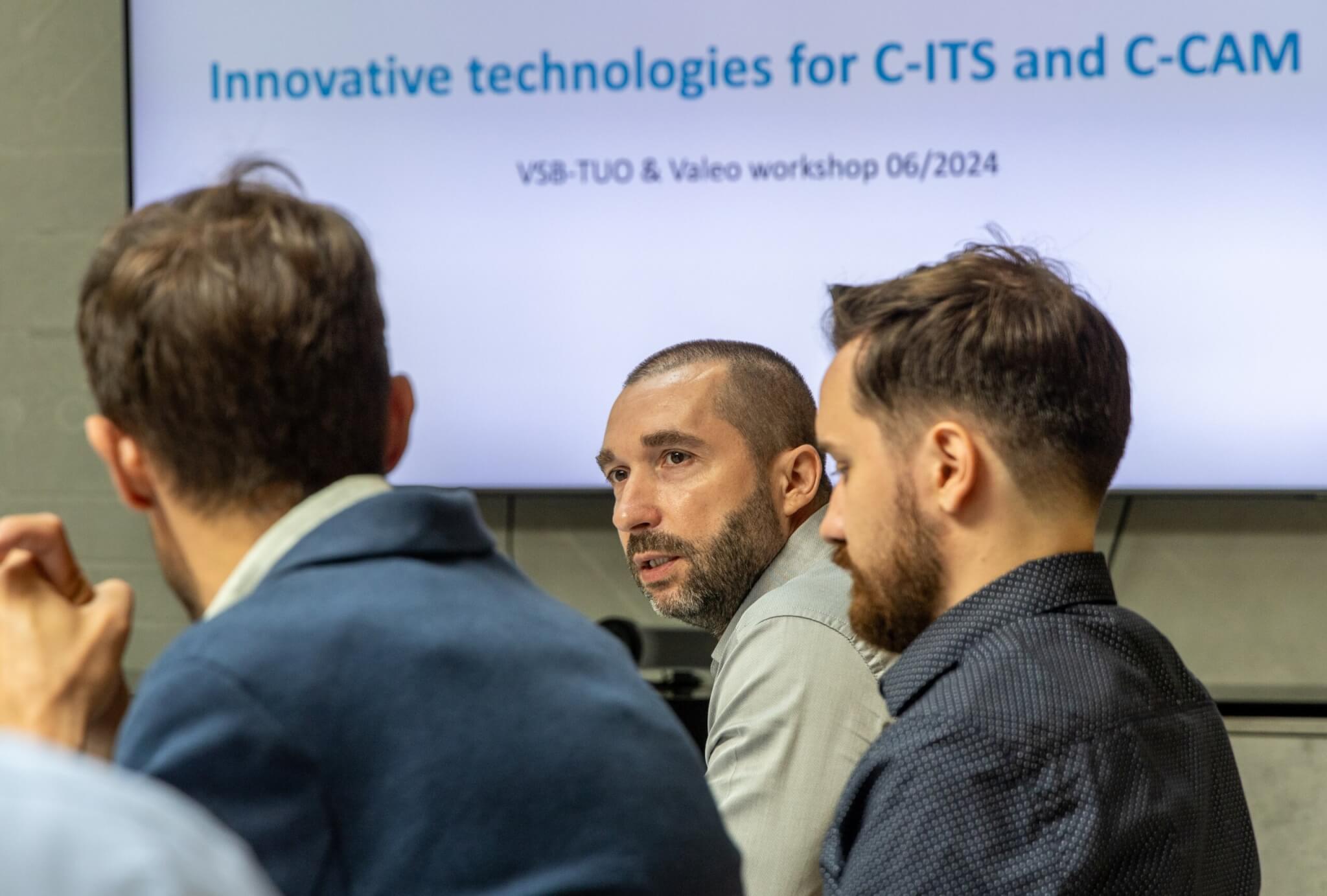
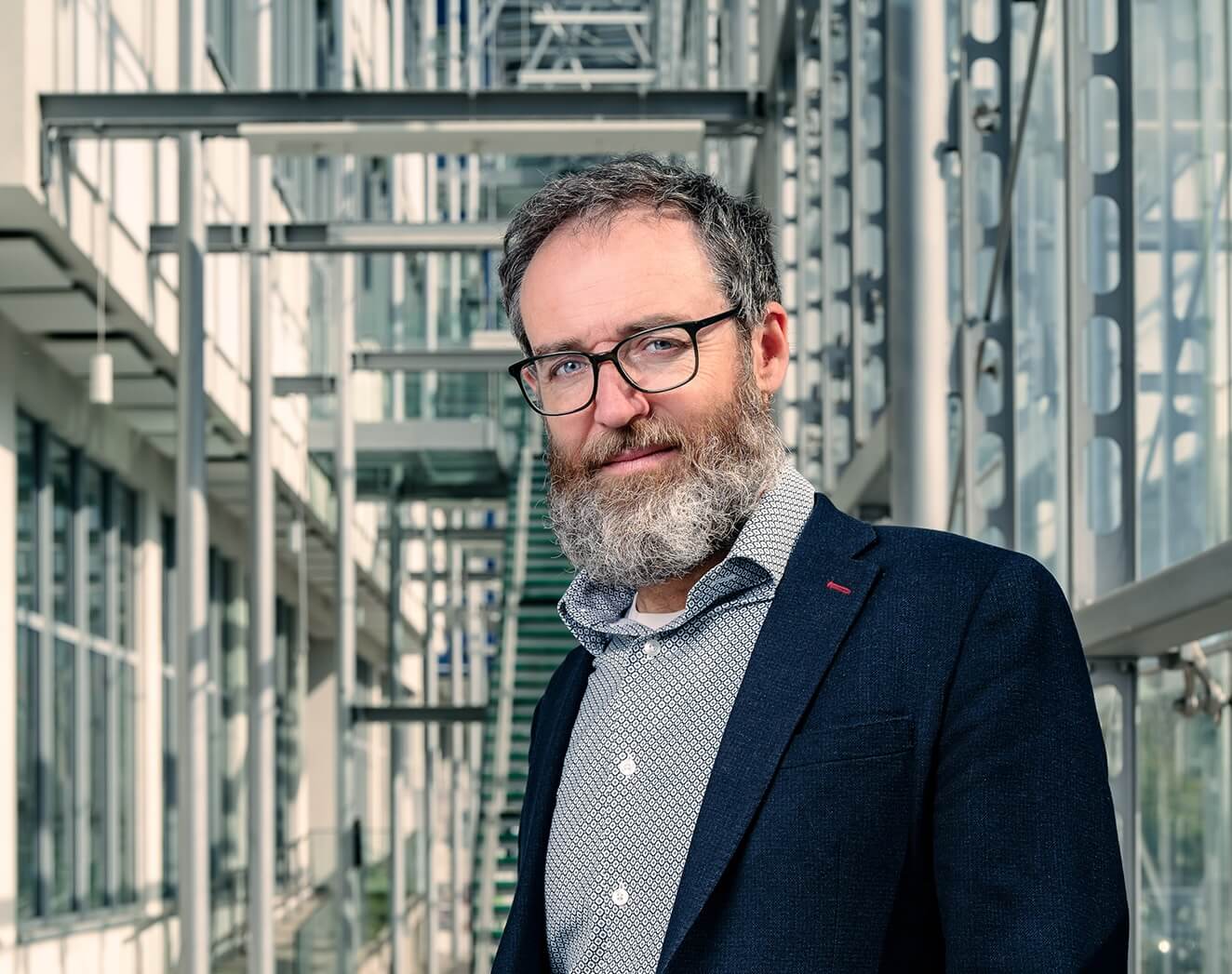
According to Petr Šimoník, university teams help companies find new approaches to digitalization and optimization of production. | Photo: FEI VŠB-TUO
Subsidies and grants: Do they go where they will be best used?
Why have some companies not decided to implement automation and digitalization more widely? Do you think it is because “why mess with it when it works”?
I can’t judge. It could be because their operations are still profitable and they have only limited risk assessment or they lack erudite personnel – we have to realize that these are completely new technologies. But gradually, with growing competition, especially from China, all companies are forced to speed up and streamline production, which can be done primarily through digitalization, i.e. higher automation with AI applications, deployment of capacity digital twins, introduction of predictive functionalities to suppress planned service outages, and the like.
Isn’t it also about money?
Companies can use funds from both national programs of the Ministry of Industry and Trade, the Technology Agency of the Czech Republic and the Operational Program Technology and Applications for Competitiveness, as well as from EU programs, such as Digital Europe or Horizon Europe in particular.
However, I am quite annoyed that various subsidies are often directed to places where there is a low ability to use them, and they pass over those who, thanks to continuous demonstrable top-notch applied results, could turn them into real transformation. At the national and European level, we often support across the board and according to the quality of the text in the project application. This is a big difference compared to the USA, where those who are the best are supported, with demonstrable results in basic or industrial research and experimental development. A quality text does not mean that the team will achieve quality outputs. Moreover, many programs are only for small and medium-sized companies. We need to open up support to the environment where digital transformation is actually being implemented, and these are large companies. They are much better prepared, have data, have dedicated people for it, and are willing to co-finance digitalization. University teams can thus gain the necessary experience with applications. I see this as an absolute necessity – to transfer theory into applications.
Today, when a university receives a grant, for example from Digital Europe, which funds experts, technologies and pilot projects, it can offer these services to companies for free or at a significant discount. However, large companies are not eligible for this, and we have a huge problem finding small and medium-sized companies to use up those grants.
“We need to open up support for the environment where digital transformation is truly being implemented – and that is large companies.”
Otherwise, are the subsidized degrees, at least those used by your university, well-established in your opinion?
In the era of the industrial revolution, it is absolutely essential to support the development of applied, or rather industrial, research and experimental development in the form of subsidy projects, however, it should be with a minimum administrative burden. This is another major obstacle for top people, who you do not need to control if they deliver results. Keeping work schedules with various categories of job descriptions, making extensive and unnecessary reports, dealing with the bureaucracy of the so-called Open Science (fulfilling the Open Science concept, which is to make scientific knowledge accessible to the widest possible public, is a necessary condition for obtaining grant support – ed. note), where, for example, you also inform the non-specialist public about research activities…? As if presenting a usable result were not enough – but in my opinion, the governing bodies are reluctant to assess this, they would have to employ erudite experts in addition to often excellent officials. We’d rather cut down a forest, print out lots of papers that require signatures, then scan them and put them into databases, and the official will check off that it’s been completed.
Weaknesses in companies: It’s about people
Can you say whether it makes more sense to optimize individual workplaces or the entire production system?
That always depends on the specific production or logistics operation, its size and process mix. Then there is also the question of how the transformation will affect the current operation. And of course, the amount of funds that the company intends to invest in the transformation.
It makes sense to look at production from two angles. In some cases, this requires a detailed look at individual operations, i.e. how efficiently robots, manipulators or conveyors work, and to optimize the performance of specific devices and their cooperation. In other cases, the goal is to streamline the flow of production as a whole, which requires an overall view of how the material and product move through the entire process in advance.
When your university is part of a team tasked with introducing digitalization in a company, what problems do you encounter when companies start the process?
The weak point is not usually technological readiness, but it can be in data collection. However, lately I have been surprised by how many companies collect data, in many cases even store it for a long time, even though they sometimes don’t even know what they are using it for.
In large companies with several thousand employees, the bottleneck can be the erudition of people who have to provide some cooperation to the process. It happens that there are no people who are able to engage in transformation processes beyond the scope of normal work duties. When a company has a proactive driver, i.e. someone who believes in it, is interested in new trends and is not afraid to get involved, we almost always feel more prepared there. Management must know that if they are courageous, it will pay off.
“The weak point is not in technological readiness, but it can be in data collection.”
What other partners are essential for the successful digital transformation of industrial companies?
The university is, of course, just one of the actors. The role of integrators, manufacturers of SW digitalization tools and platforms, and various technology vendors is irreplaceable.
Who usually approaches the university with a request for cooperation? And at what stage of the project does it make sense to turn to the university – even before the investment decision, when designing the technology?
The role of the university in the process of implementing digitalization is partial; we always need cooperation with an integrator and sometimes with technology vendors. Integrators are also the ones who most often approach the university and “pull” certain of our people to cooperate. It is always appropriate to form a consortium – a manufacturing company, an academic team, an integrator – already during the preparation of the digitalization process.
No. 1: Capacitive digital twins
What types of tasks do you and your partners in companies most often solve?
We most often focus on specific parts of production or logistics, rather than on the complete digitalization of the entire company. A typical example is the creation of a capacity digital twin, which allows you to monitor the flow of materials and products across the line, identify bottlenecks and optimize the use of machines and human labor. Projects usually start at a sub-level – for example, at a specific operation such as material handling or sheet metal processing – and only gradually expand. Thanks to this, unnecessary movements can be reduced, production can be better planned and its efficiency increased.
Our role is primarily to design and simulate solutions. The implementation itself is then provided by technology integrators who convert the model into real operation.
In the future, there is a shift towards so-called “software-defined” production control, where changes could be implemented faster and more flexibly, similar to what is happening today with mobile devices and soon with cars. Today, however, production is still fragmented among various suppliers and a fully integrated approach is still lacking.
So it happens that you are solving the problem of a poorly functioning line and you find out, for example, that the line is completely fine, but some human operator is working poorly.
Yes, sometimes it happens. Thanks to digital twins, we can now also take into account the behavior of the operator and find out whether the bottleneck is in the machine, or in human activity or suboptimal deployment of human resources. It is not about “assessing people”, but about optimizing the entire process – just as we increase the performance of machines, we are also looking for a more efficient organization of work.
The problem can also be in logistics or handling, which can be replaced by automation, for example with automatically guided carts or robots (AGV). Other times, it is an inappropriately designed solution or a limitation on the part of the integrator. This is precisely why an independent perspective is important – for example from a university, which is not burdened by specific suppliers and can objectively assess where the real problem lies.
Can you give examples of solutions that were created in cooperation with your teams and are now operating in real production in automotive companies?
For example, at HP-Pelzer (Adler Pelzer Group), we created a digital twin of part of the production process for wheel arches. Using tools such as Tecnomatix or Visua Components, we simulated the production line and material flow, identified bottlenecks, and tested various layout options before real interventions. The model also took into account the work of operators.
This allowed the company to detect problems before implementation, optimize production flow and line utilization, and significantly accelerate the introduction of changes. The simulation outputs then served as a basis for the integrator when adjusting real production.
Another example is the implementation of a capacity digital twin of the NC Line production line using the Tecnomatix Plant Simulation tool. The solution allowed for a detailed analysis of the production flow, capacity planning, and identification of bottlenecks throughout the process.
Thanks to this, it was possible to optimize the use of machines, improve production planning and increase its overall efficiency without the need for immediate interventions in real operations. The benefit of the project is also confirmed by the fact that the application won the main prize of the Confederation of Industry and Transport of the Czech Republic at the International Engineering Fair in Brno.
If you had to list in general areas where simulations and digital models can be used and where they can help companies the most, what would they be?
First of all, companies will stop working by trial and error. Thanks to simulations, they can compare variants, predict the throughput of materials and semi-finished products, manage supply queues and monitor utilization. They can predict where to add a machine or service personnel. On the service side, it is possible to determine in advance or during the processes how many people and where to place them. This will significantly speed up the search for the causes of problems. Thanks to predictive methods, it is possible to plan shutdowns or predict failures, including the preparation of spare parts. Simulation will help change logistics routes according to the current status of the production and logistics process. And much more.
Testbeds: Drug Dealer Method
What we have talked about so far, i.e. joint projects implemented most often in the form of consortia and for the most part directly in companies, is just one form of cooperation with industrial enterprises. Perhaps an even more significant area is testbeds, which allow research to be carried out together with companies in real conditions.
Yes. We owe the creation of testbeds in the Czech Republic primarily to Professor Vladimír Mařík and the National Center for Industry 4.0, which was established with the aim of connecting academia with industry and accelerating the implementation of the principles of Industry 4.0 into practice. Today, they are places where the excellent R&D capacity of universities is combined with the application sphere. The testbeds were established in 2017 in Prague and later in Brno and Ostrava, and it was a very visionary decision. This meant a huge shift – from Industry 3.0 to Industry 4.0, to greater implementation of digitalization and use of artificial intelligence and coordination of academia with the application sphere.
Testbeds were built as open experimental platforms where companies can verify new technologies in a real but controlled environment – from robotics to partial digitalization tasks to complex work with data from large production facilities – before they are put into operation. Their role is key in the “test before invest” approach, i.e. the opportunity to try out solutions without high investment risk.
A characteristic of testbeds is that they are not classic laboratories, but semi-operational environments combining research, teaching and industrial applications, where universities, technology partners and companies cooperate. Ideally, they act as a bridge between development and real implementation in production.
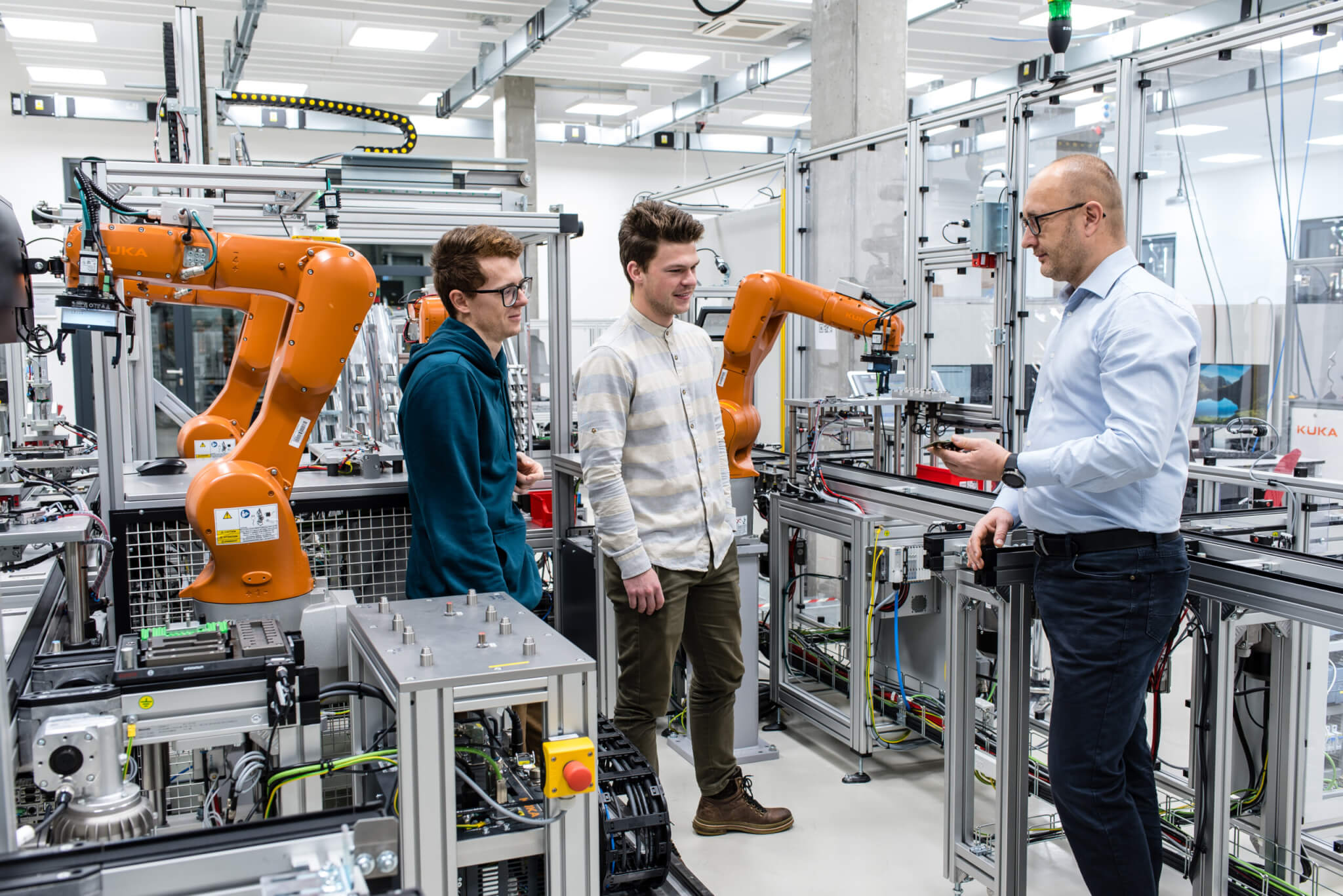
Smart Factory Lab in the VŠB–TUO testbed focused on development and education for Industry 4.0 with an experimental robotic line connected to a digital twin. | Photo: FEI VŠB-TUO
What testbeds are specifically operating at your faculty?
The faculty operates primarily one comprehensive testbed – the CPIT TL3 platform, which connects several areas relevant to industrial companies. These are not isolated laboratories, but integrated environments – the so-called Living Labs, where research meets practice.
It includes, in particular, the Smart Factory Lab focused on the digitalization and automation of production, the Mobility Lab focused on the technical development of vehicles, especially autonomous and software-defined, and the eHealth Lab focusing on assistive technologies. Everything is connected by a common data and communication infrastructure for possible connection to the nearby National Supercomputing Center IT4I, in the case of applications using HPC infrastructure. Together, we solve a number of application implementation projects, e.g. the Digital Europe program or those financed from private sources.
What requirements do companies bring to the testbeds, what do they want to verify in the Smart Factory Lab?
It can be the verification of a specific solution for workplace robotization, optimization on robotic arms of robots, whether industrial, collaborative or mobile. Companies often also deal with data work. This includes their collection, cleaning and sorting, adding context and subsequent processing and evaluation. In other words, it is the entire process from “raw” data to information that can actually be used for production management and optimization. Often, solving these tasks is the first step towards digitalization.
For automotive, the Mobility Lab is the most relevant. What companies do you collaborate with and on what?
Mobility Lab is focused on the development and testing of technologies for automotive and mobility. We cooperate a lot with the Prague R&D center of Valeo, on the development of sensor systems and technologies for automated vehicle control, and also with Tatra Trucks on automated and remote vehicle control. We also have broader cooperation in automotive development and projects with Škoda Auto and Hyundai Motor Manufacturing Czech.
Cooperation most often takes place as public projects, which are partly financed by grants from the Technology Agency, Horizon Europe or Digital Europe and partly co-financed by companies.
Few people: Universities must transform
Testbeds generally allow companies to validate technologies and get expert support, often for free or with a significant subsidy, but the implementation itself remains with them. Do you have an overview of how many companies test and then invest and how many just try for free and do not continue?
We are no longer able to monitor this. We are taking the drug dealer method, providing some services and expertise for free and hoping that those companies can evaluate the importance and pay for additional services or invest directly.
“We’re taking the drug dealer approach, providing some services and expertise for free, and we hope that companies will be able to appreciate the importance and pay for additional services or invest directly.”
Can you accommodate all companies interested in collaborating with your students or engineers?
The interest is greater than we can handle. For example, my team, which has about 20 people, is currently working on 12 projects, the vast majority of which are commercial, often involving futuristic technologies.
Can’t more academics, researchers or PhD students be involved?
In general, I would definitely be in favor of universities being significantly more involved in collaboration with industry. But there are certain limitations that stem from the nature of their activities and mission. Universities must primarily provide quality teaching and engage in science – in my opinion, unfortunately with high pressure, especially on publication outputs. Applied research or experimental development with commercialization output, which is very important for the development of industrial areas at the national and EU level, must be more supported, especially for teams with demonstrable application results. The pressure on publications is primarily related to the evaluation methodology and subsequently to money, or rather to how and according to what universities are evaluated.
Universities must transform, because if we continue to measure performance primarily on publication activities, we cannot compete with what is happening elsewhere in the world. We have very erudite people, but instead of being able to devote themselves to applied research, they spend their time on journals. They have to write articles, because without them they cannot currently be doctors, associate professors or professors. On the other hand, I am convinced that publishing is very important, because in doing so you are actually looking for and showing new solutions and getting smarter, but it must not be at the expense of everything else.
Precisely because of the limited capacity options that universities have in relation to industry, I would appeal to companies to try to learn from universities during the course of the contract they are implementing and to continuously educate their digitalization specialists.

Doc. Ing. Petr Šimoník, Ph.D., after graduating from VŠB – Technical University of Ostrava, decided to focus his career on research, development and innovation, especially in the automotive industry. Since 2017, he has been the Vice-Dean for Industry Cooperation and later also Commercialization at the Faculty of Electronics and Informatics of VŠB-TUO. His professional work consists of leading research projects and teams that focus on the development of algorithms and technologies for automated vehicle control as well as elements of digitalization in industry and the public environment. He has long supported the involvement of students in scientific and application projects from the very beginning of their studies at the university.
Contact
Next articles and interviews
Next articles and interviews
+ Show