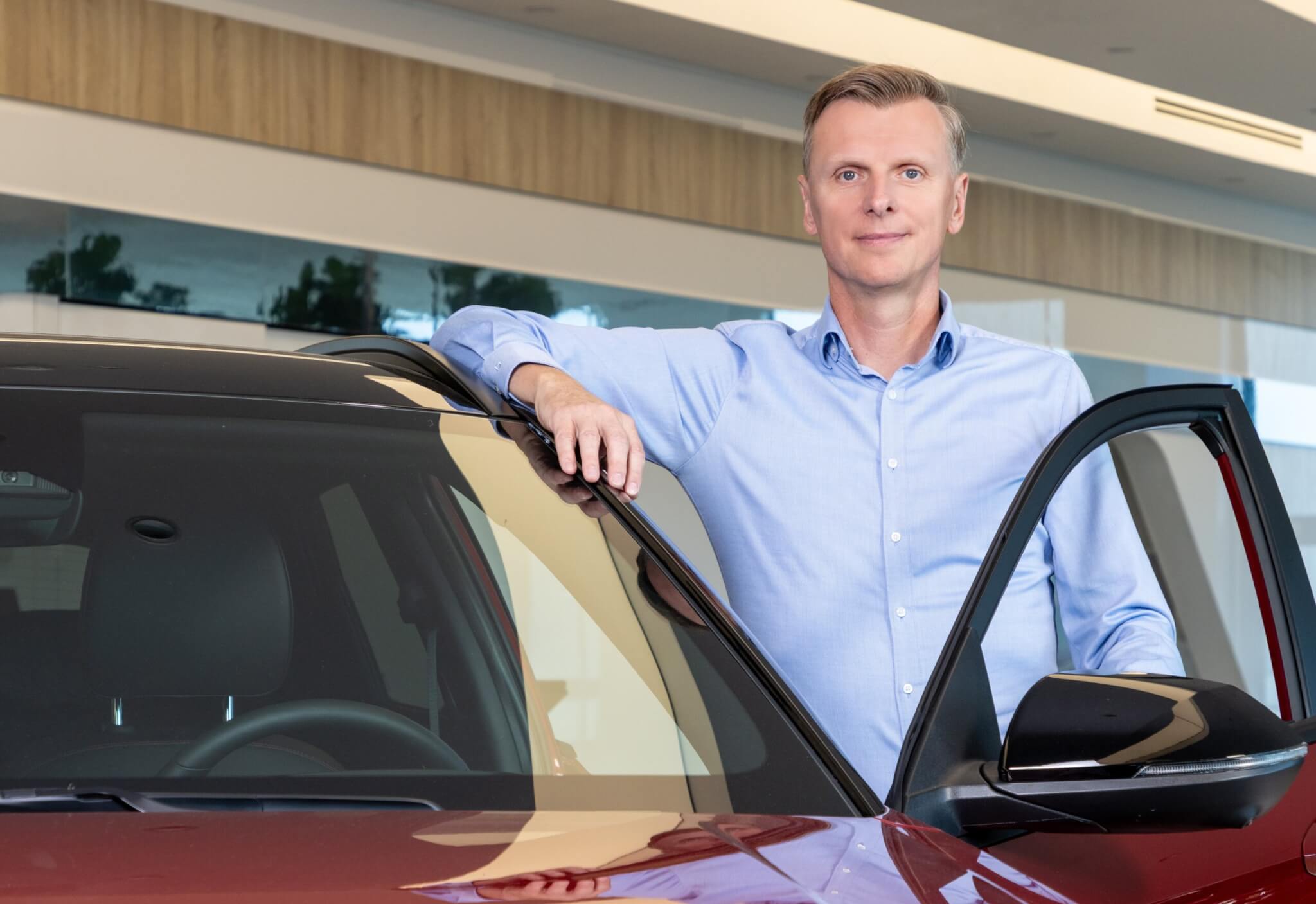
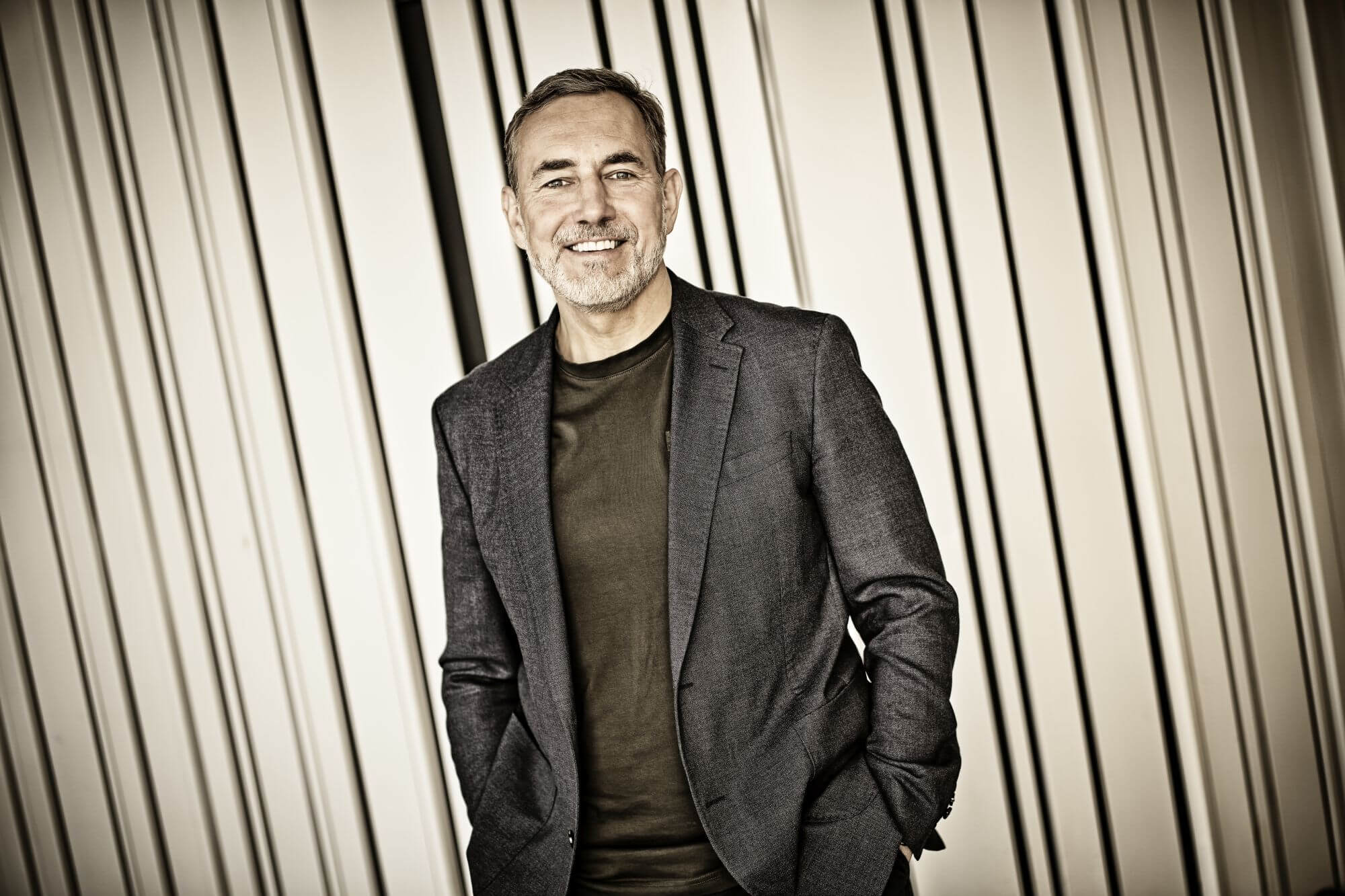
The newly re-elected president of the Association of the Automotive Industry and a member of the board of directors of Škoda Auto, Martin Jahn, assesses the Czech automotive industry as healthy and standing on solid foundations, but expects that with the acceleration of the transformation, the fight to maintain market positions and even to survive will be significantly more difficult. The fundamental factor that will influence the future of the automotive industry in Europe is European regulations. “I do not see any sincere effort from the European Commission or the European Parliament to do anything for the industry,” says Jahn.
For months, there has been talk and writing about how the European automotive industry is in trouble and that it is bound to end badly, but the Czech automotive industry as a whole is doing well. Do you agree? Why is that?
For several years now, I have been saying that the automotive industry in the Czech Republic has such a solid foundation that it can emerge stronger from the transformation and all the crises. This is already proving to be the case. Compared to the overall state of the European automotive industry, we have very solid turnover, sales, profits, and overall stability. New projects are coming in, so we are doing well.
The Czech automotive industry: Solid foundations, but we’ve also had a bit of luck
What does it mean that the Czech car industry has “good foundations”? And are we doing something better than other countries that also have a strong automotive tradition?
We are certainly also a bit lucky that here we have production plants of brands that are doing well and are among the winners in this global competition. But especially here we have a tradition of industry and companies that have invested in educating people. Labor costs are still at a competitive level compared to Western Europe. And even though we complain about the government, the conditions in the Czech Republic are still good for this business.
We also have a lot of managers here, both in companies with foreign owners and in Czech ones, who are able to bring investments to the Czech Republic. The increase in costs in Western Europe and the pressure to reduce them, which is reflected in the transfer of investment projects to us, also help us a bit. And while projects with lower added value, which are already labor-intensive, are moving away from the Czech Republic, projects with higher added value are coming here. So the quality of production, research and development is also increasing.
For now, we are talking more about the finalists, the situation is not quite the same with the supply sector.
The supply industry is having a very difficult time, especially because the ratio of production volumes of cars with combustion engines and electric ones is completely changing. The entire industry has started to invest significantly in electric cars and reduce the production of cars with combustion engines, but the transformation is taking place much slower than expected. It is difficult for component manufacturers to overcome this. They have lower margins and are much more prone to not investing properly.
So yes, it is true, many suppliers have problems. But I think that overall the supply sector in our country is doing better than in some other countries.
But isn’t it just “for now”? Can’t we expect a bigger wave of layoffs in the Czech supply sector?
As I said, some production may be moving to cheaper locations. But we still see a lot of investment projects coming in, which are coming in. So if there are layoffs somewhere, there will be hiring somewhere else.
When I talk to the management of those companies, they sometimes complain, but basically they manage to expand production, bring in higher added value, and invest in research and development.
“We still see quite a few investment projects coming to us.”
You mentioned some factors that influence the fact that Czech companies have enough orders. Isn’t it also the case with suppliers that they can be satisfied with a lower margin?
No, I think that it is precisely thanks to lower costs that it is possible to maintain that margin.
Every supplier will tell you that they are under strong pressure from customers, especially the finalists.
Of course, because the finalists are also under great pressure. Profitability in the automotive sector has dropped significantly and the finalists are of course trying to maintain their margin.
But if I can speak for Škoda, we try to have a partnership relationship with our suppliers. We monitor their situation for the long term and try to accommodate them so that our cooperation is stable and they maintain a reasonable margin.
A wave of consolidation is coming in the supply sector
The future of supplier companies – like all companies – will also depend on how quickly they succeed in implementing new technologies, automating, robotizing, or investing in development. Do you feel that companies in the automotive sector are moving in the right direction quickly enough?
I would say yes, I see a lot of positive examples in our sector. Within the industry, the automotive sector has always invested the most, digitalization has been faster in our country. And we are doing well even compared to other countries.
However, there are still small or medium-sized companies in the supplier sector that operate a bit old-fashioned and cannot withstand the great pressure on efficiency and profitability, so there will be room for a wave of consolidation. But this is a natural recovery process.
How much of the turnover does Škoda Auto spend on capital expenditures?
For Škoda, the long-term emphasis on innovation is one of the key pillars of our brand’s success. For example, in recent years we have invested approximately seven percent of our turnover in research and development, including investments in tangible and intangible assets. We expect to continue significant investments in these areas next year.
High energy prices will not drive companies to America
Companies in the automotive industry are doing well overall, so do you think the complaints about high energy prices and too much regulation are justified? What do you think is really holding companies back today, whether finalists or suppliers?
Certainly these two things you mentioned. They are right to complain about this, because high energy prices and excessive regulation will not bring them anything. If I pay more for people, I might get better-quality and more educated experts, which will increase my work efficiency. I get nothing from the higher price of electricity, and I don’t get anything from excessive bureaucracy either.
How serious is the problem of the lack of qualified labor?
Yes, that is a problem that companies often point out. That is why we want to improve the employment opportunities for foreigners and strengthen the quality of technical education. These are topics that we have been repeating for ten years.
Regarding high energy prices, do you have any signals that more Czech companies would like to move to another continent because of this?
It is certainly not a general trend and always depends on the specific business. Importing components from America to Europe is not very common. Companies tend to invest where they have sales, for example in America or China, and will not transport components from Europe to America and vice versa. The costs of transport and logistics are too high. Moreover, there has been uncertainty in the area of customs policy recently.
We are more likely to see component production moving to countries such as Morocco. North Africa is currently becoming a center for quality production at lower prices. And then there is Ukraine, where once the conflict ends, the possibility of investing in some more cost-effective production there will probably open up.
As far as I know, Škoda Auto had and still has some production in Ukraine. So do you see a real possibility of greater expansion after the war? Which components could be produced there?
Yes, we have a partner company in Ukraine, in Solomonovo we assemble the Karoq SUV in a limited volume from partially disassembled kits (SKD). We are trying to maintain these activities.
If the situation in Ukraine stabilizes, this will certainly be an area where the production of certain components, such as the assembly of wiring harnesses, can be moved.
Another gigafactory? Unlikely in Europe
There has been talk of a gigafactory in the Czech Republic for months. The chance that a large battery cell factory could be built here still exists, but not everyone agrees on the importance it would have for the Czech economy. What do you think?
Battery cells are of course a key part of electric car production, and for an automotive powerhouse like the Czech Republic, it would not be bad if battery cell production were here. However, in my opinion, this is rather unlikely given our high energy prices.
There is currently significant overcapacity in the production of battery cells in the world, because the transformation of electromobility is not going fast enough. Moreover, a decision will be made in the near future on which type of battery cells will be the dominant one. So I am quite skeptical about new gigafactories being built in Europe.
Where does Škoda Auto source its battery cells from?
At Škoda Auto and throughout the Group, we have long operated according to a simple principle – we produce some of the components ourselves and buy some from verified suppliers. By combining our own production and cells from external manufacturers, we are more flexible and maintain access to the latest technologies and reliable supplies.
A few days ago, you inaugurated a new production hall for battery systems. How significant is this investment for you and for the entire group?
The new hall is a strategic milestone for us and for the entire group. Thanks to its launch, we will be able to produce up to 2,177 battery systems per day in Mladá Boleslav, in the sum of both halls. The batteries from Mladá Boleslav will power not only the Škoda Enyaq and Elroq cars, but also other electric models from the Volkswagen, SEAT and Audi brands, so the significance of the project goes beyond the borders of the Škoda brand.
At the same time, it is an important investment in employment and technology in the region. The new production hall employs 600 workers in three shifts, of which approximately 30% are women. The hall uses an 84% automation rate and 131 robots, which makes it one of the most modern operations of its kind.
Tasks for the government: energy, labor law, bureaucracy
We have assessed the Czech car industry and listed some of the obstacles to doing business. When you meet with the Minister of Industry, Karel Havlíček, what do you press the most on, what should he try to change?
Energy prices are in the first place.
How would you imagine the government doing this?
Some proposals already exist. However, if it is to be solved quickly, it is only possible with the help of subsidies, both for the population and for sectors with high energy intensity.
“The biggest problem is energy prices.”
What other demands does the automotive industry have on the government?
We would like to achieve simplified employment, flexible labor law and reduced bureaucracy.
Another key issue is the support for research and development, which of course does not only concern the automotive industry. Here, it is necessary to set the implementing regulations for the use of research depreciation in a way that is user-friendly for companies. It would also be desirable to increase funds for the programs of the Technology Agency, which co-finances applied research.
Of course, the European rules for CO2 are also an important topic for us, which requires finding possible ways to assert our interests in the EU.
Škoda Auto and its focus on non-European countries
When we were arranging this interview, it was very difficult to find a date. You were in Vietnam for work, then in India, then in Saudi Arabia. Do you always have to visit these markets of yours because you need to check them, or is there always something to celebrate?
It is often a combination of both. In India, we just launched the modernized Kushaq model and held a dealer conference there. We recently opened our first showroom in Saudi Arabia. There is always something to celebrate and something to check, something to look at. It is also important to motivate the people who work there. At the same time, we monitor how the local market is developing in a given country, how the competition is behaving and how the local economy is developing.
The countries mentioned represent our important markets outside Europe and we need to devote more energy to them. So such trips are a regular part of my managerial work.
In Vietnam, the plant where you introduced CKD production belongs to a local partner, so the investment there was probably not that high. The production plant in India has been there for maybe 20 years. What about the return on these investments?
Of course, the return is a challenge, because in these countries the price of a car is low compared to Europe. Places like India are countries of the future, everyone is pushing there, investing and waiting for the market to grow significantly. There is a very strong price war there. As in all markets, Chinese brands are coming here, trying to solve the large overproduction in China by exporting. All markets outside Europe are difficult.
Is it possible to fight Chinese brands in these markets at all?
The truth is that they often establish themselves in these markets more easily than in Europe. The European customer has a certain experience and certain expectations. But in India there are many people who are buying a car for the first time in their life, they have no experience. However, when it comes to customers who have had a Skoda before, they buy it again.
Fresh portfolio, brand strength, efficient production
We assessed the Czech automotive industry as a whole, but Škoda Auto still stands out from it. Its results for 2024 were historically the best, in terms of sales, operating profit and profitability. Strong growth continued last year. What do you owe this success to? It probably won’t just be because Škoda has strong fundamentals.
We have made several good decisions in the past. First, we have a relatively fresh and successful product portfolio. In fact, we don’t have any models that are flops or that are nearing the end of their useful life. Our flagships – Superb, Kodiaq or even Octavia, and in the electric world Enyaq and Elroq – are in great demand, they are the top in their categories. Elroq was the best-selling car across all powertrains in Denmark and the Netherlands in 2025, which is a great success.
The second factor is the strength of the brand, in which we have also invested a lot. The new design, new logo and new way of communication are working very well, even in markets where we were not doing so well before, such as France or Spain. And then we managed to work very efficiently with purchasing, production and the use of the capacity of the production plants.
Even in Wolfsburg, they are constantly trying to reduce costs, which must also be reflected in the subsidiaries, including Skoda – regardless of the fact that it is one of the most efficient brands today. Do you have any idea how the overall savings program will affect Skoda?
Skoda is working to optimize costs and processes in the long term. While we are counting on a natural annual reduction in the number of jobs by three percent, given demographic developments, the total number of employees is not decreasing. At the same time, we are trying to take over new activities within the entire group.
Which activities are in question?
These are, for example, some activities in the areas of development, IT or after-sales services. We are also taking over competencies in areas such as production and purchasing, where we will be responsible for the whole of Central and Eastern Europe.
However, some production activities are being moved from the Czech Republic to Germany so that Volkswagen can fill unused capacities. This is supposed to be engine production, for example. Is this true?
The moves are going in both directions. Part of the production of gearboxes is being moved to Vrchlabí and, for example, part of the production of some engines will be moved to Germany.
A difficult future lies ahead
So are the unionists’ concerns about investments, the role of Škoda plants and long-term job stability unnecessary?
Our unions are monitoring every move very carefully and are working to maintain as many activities as possible. There are voices of warning from the unions, but Škoda is strengthening rather than weakening for now.
There was criticism that we moved the production of the Superb model to Bratislava, but you can see that all our plants are still running at full capacity and are at 100% capacity.
So it is right that the unions are speaking a little cautiously about this, but management must work on it and communicate optimistically. I think we have very good cooperation with the unions and we are all working together for the benefit of the company.
But you yourself here at Škoda cannot influence much, and Volkswagen also has strong unions in Germany.
You are right, very difficult times are coming and more and more savings will have to be made. What we are experiencing today is just a prelude to what is to come. As sales of electric cars increase, the pressure to reduce costs will increase. Batteries are still expensive, there is Chinese competition and other negative factors. Every year will be harder and harder.
We can enjoy our successes today, but we know that this time will be harder for us, as well as for other companies in the group. We will need to look for synergies and optimizations. However, this is nothing new for the management of Škoda Auto.
Where is there still room for cost reduction? Is it technology? Or cheaper suppliers?
It is about technology, about investments in AI, in automation, but it is of course also about making employees’ work more efficient.
In your opinion, will Škoda’s position within the group change in any way in connection with all the changes?
Today we have a certain market share, decent sales and plant utilization. Our next role will depend on how many new cars we will be able to develop, in what quality we will produce them and how many we will sell. Nobody has any guarantees in today’s world, so we have to remain vigilant and look to the future.
When I returned from China five years ago, it was on the table that Škoda would be the “Dacia” of the group. Today we have the highest operating profitability, we are the third best-selling car brand in Europe. Next year we will try to make it even better.
Where are margins generated?
What is the production mix today? What share of production in terms of units are cars with combustion engines and what share are electric cars?
Around 80 percent are still cars with combustion engines, 20 percent are electric cars.
It is cars with combustion engines that give you a good operating result, because the margin for electric cars is almost zero, is that right?
It is true that the margins for combustion engines are significantly higher. Or rather, I would say that they are standard for cars with combustion engines, while they are significantly lower for electric cars.
We will produce combustion engines as long as it is legally possible, economically viable and customers want them. | Photo: Škoda Auto
Zero?
Slightly positive.
When will this change? What will influence margins to be higher?
Battery prices.
Will it help if more electric cars are sold?
The price of a battery does not depend on the number of cars produced or sold, but is set uniformly.
“Without incentives, the transition to electromobility will be slow.”
How will the incentives that are being introduced in Germany for the purchase of electric cars affect Skoda?
I assume that it will be slightly positive for us, that it will help us with sales.
Do you consider this the right way to support sales?
If the political representation wants to support and accelerate the transition to electric mobility, then yes, because experience, not only from Europe, shows that without fiscal incentives, the transition to electric mobility will be very slow.
Can we estimate today how long Skoda will continue to produce cars with combustion engines?
Skoda will produce cars with combustion engines if it is legally possible. That is the first assumption. The second assumption is that it will be economically advantageous. The third assumption is that customers will want it.
The transition to electromobility must be slower
When the Fit for 55 package was presented by the European Commission in mid-2021, which included, among other things, target emissions limits in the form of a 100% reduction in average CO₂ emissions by 2035 for new passenger cars, it seemed like a good idea from the perspective of most politicians and many representatives of the automotive industry. Where did the mistake go? Misjudged customer interest?
Conditions have changed to a large extent. When CO₂ regulation began to be prepared, it was long before the approval of Fit for 55, still in the pre-Covid era. Since then, many things have happened. There was a chip crisis, the war in Ukraine began, energy prices rose significantly, and the aggressiveness of Chinese competitors increased. On the other hand, what was expected, namely that the price of batteries would fall significantly, did not happen. I would say that everything negative that could happen in the area of the transition to clean mobility has happened.
It turns out that it will not be possible to switch to electric cars so quickly. Of course, customer sentiment also played a role, but not that crucial. If Europe were flooded with clean and cheap energy and batteries cost half as much, it could work.
Do you think the European Commission is sufficiently aware of this?
Certain modest steps are being taken to rectify the situation. We have Euro 7, which still allows us to produce cars with combustion engines, we have a three-year distribution of fines, which will mitigate the negative impact of not meeting the quotas. And now the debate has opened about 2035, when the sale of cars with combustion engines is to end on the European market. The initial amended proposal by the European Commission is more of a cosmetic revision that does not solve anything at all. It needs to be worked on further so that the transition to clean mobility is realistic in terms of the stability of manufacturers and customer expectations.
Do car manufacturers have any unified, concrete proposal on how to change the original regulation?
Different car companies have different opinions on this because they have different levels of investment in electric cars, different success rates in selling electric cars, different overall strategies, and different owners.
“The rules need to be changed so that the transition to clean mobility is realistic in terms of both the stability of manufacturers and customer expectations.”
So how can we agree on something reasonable?
Such regulation must be based more on what the European economy can afford, what the customer wants, and what the technological capabilities of European car manufacturers are. Germany may be able to afford to subsidize electric cars. But many other countries cannot. A compromise must be found that will suit everyone. It is a task for the European political representation to realize what the impact of the transition to electromobility will be – in a situation where America has completely turned away from electromobility and, for example, China and India are considering the use of fossil fuels.
So is it also about a possible energy shortage?
This is certainly a factor that the European political representation must take into account. Energy consumption will increase significantly due to the advent of artificial intelligence and digitalization. There are an increasing number of sectors that are extremely energy-intensive, so many new sources will need to be created. This is a very complex topic. We need to approach this rationally and ensure that it does not endanger the European automotive industry, which is one of the last in Europe at the world level, and that it meets the needs of customers.
Based on this, new rules need to be created.
At this moment, when we do not know what the rules will be, do you think the European automotive industry is in danger? Could it be that it will become just a marginal sector in time?
It is certainly in danger. First, overall, whether it will survive at all, and then its structure is in danger. The question is where the companies that will produce cars in Europe will come from, how many European manufacturers will there be, how many American, Japanese, Korean, Chinese.
Why European strategies don’t work
Nothing is going quite as well as it should in Europe. When the joint efforts of several countries, led by the Czech Republic, managed to push through the softer Euro 7 standard, it was a great joy, but as far as I know, there are no implementing regulations for it yet, and it is not known how some of the quantities will be calculated. That is certainly also a problem.
We are trying to push for the implementing regulations to be completed as quickly as possible, because there are still uncertainties, especially with new things like brake wear. This is yet another proof of how bureaucracy burdens us and makes our work more difficult.
The EC is working on a series of new legislation that should increase the competitiveness of the EU. Do you expect any of these initiatives to help the European industry, especially the automotive industry?
The CO2 legislation relating to 2035 will have the greatest impact on us. What is still troubling us are the already mentioned yet missing implementing regulations for Euro 7. And another thing that is unnecessarily preoccupying companies is ESG and reporting. We know about this, but everything is in the phase of promises, or rather omnibuses. I will believe in some improvement when those promises are followed through.
Since the beginning of the century, the EC has adopted many strategies aimed at making the EU the most competitive in the world, but none of them have been fulfilled yet.
At the beginning of the 21st century, the European Commission listened to industry and had a sincere interest in its competitiveness. This was disrupted sometime in the middle of the last decade and then disappeared completely during Covid. And then nothing meaningful was started, the European Commission and the European Parliament completely separated themselves from the issue of competitiveness. And this was reflected: America and China are running away from us both technologically and in economic performance. All this is also reflected elsewhere, in political power, in the ability to arm the army.
The EU is currently in decline and I do not see any sincere effort from the EC or the European Parliament to do anything for the industry. There are many other interest groups that are given much more space, and there are many intentions that once seemed noble, but have turned out to be unfounded in today’s world and are damaging to Europe.
What is it? Who is to blame?
It is all about people. It is about false political ambitions, misdirection and a misunderstanding of today’s world.
 Martin Jahn is a member of the Škoda Auto Board of Directors responsible for sales and marketing and President of AutoSAP. He graduated from the University of Economics in Prague and received his MBA in Chicago. He began his career at CzechInvest, where he was CEO in 2003–2004. He then briefly served as Deputy Prime Minister for the Economy. Since 2006, he has been associated with the Volkswagen Group, where he held management positions in Russia, Germany and China. In 2021, he was elected President of the Association of the Automotive Industry and defended this position again in December 2025.
Contact
Next articles and interviews
Next articles and interviews
+ Show