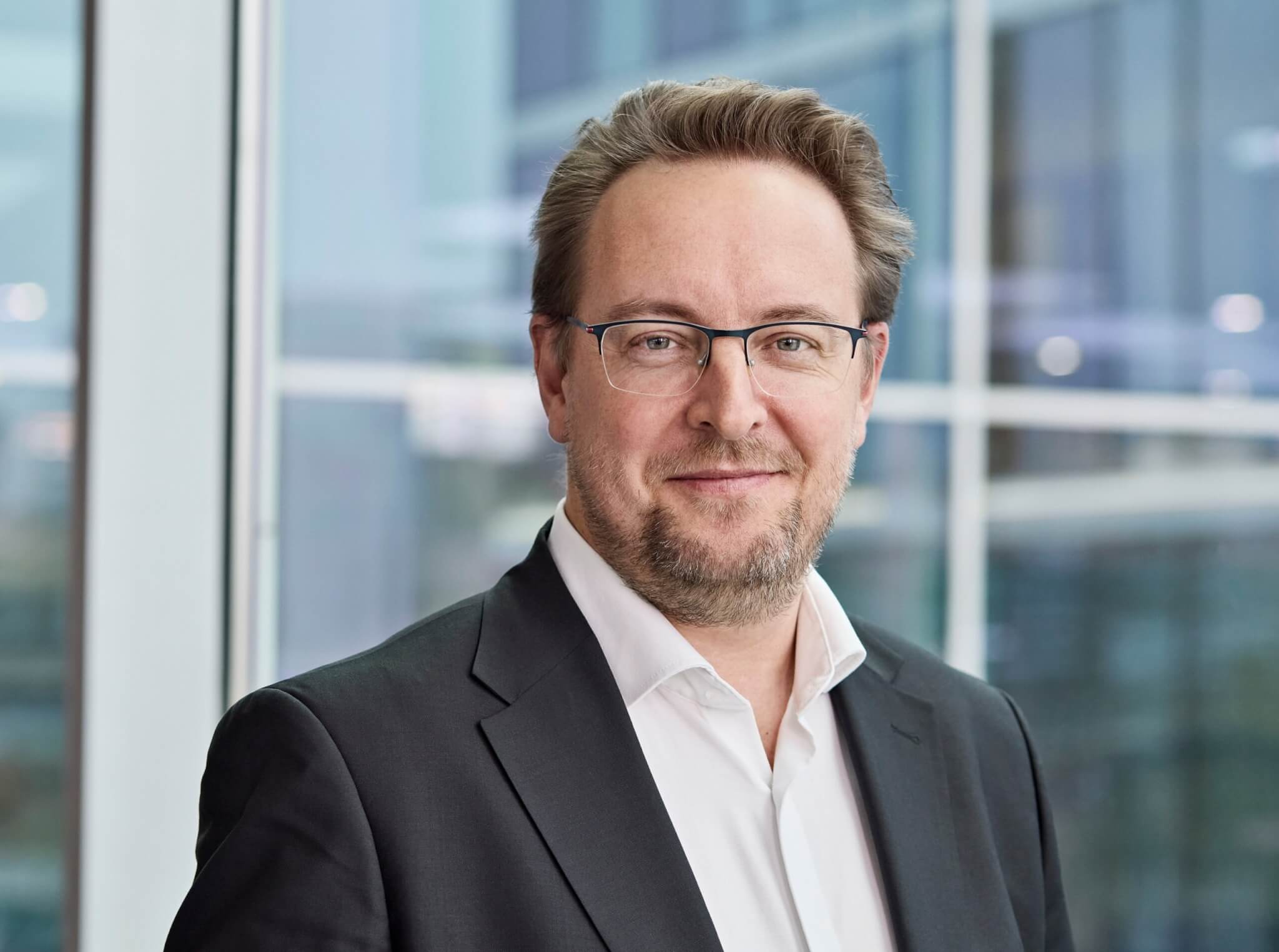
Investment in science and research is not a problem, but their meaningful distribution is. Real change can only happen when people with vision and courage are in charge at all levels. This is exactly what we talked about with Professor Vladimír Mařík, founder and scientific director of the Czech Institute of Informatics, Robotics and Cybernetics (CIIRC) at the Czech Technical University – an institution that connects academia with industry and accelerates the implementation of smart solutions in Czech companies.
Is it possible to evaluate the current technological level of the Czech Republic in a simplified way?
The technological level has many dimensions. It starts with the level of research, continues through the level of production and production capacities, including the ability to adopt new technologies, and ends with the overall level of the market.
In science and research, we are still far ahead – especially when it comes to artificial intelligence, automated control, but also in general the design of machines and industrial equipment. As for companies, some are at the level of the time, others have remained frozen in the time of thirty years ago. This is related both to the thinking of management and to the large investment costs that many of our small and medium-sized enterprises simply cannot afford. So I would say that in industry it is alternately cloudy and the sun is shining. In terms of the ability to adopt new technologies, our people are above average here, in my opinion. And the market will always adapt sooner or later.
So if we want to move somewhere and be competitive in the world, we must focus on the second dimension – the technological level of production.
How do you think the Czech Republic stands within Europe?
Our research is certainly at the European level, in some areas we can compare ourselves with the European top, in some even the world top. What we are unfortunately lacking is transforming what is being researched here into real value. Innovating production based on research results, bringing new products, cheaper or also innovative, that no one else produces. Transferring knowledge into practice is a serious matter and we have to work hard in this regard.
“Škoda is already among the top European brands.”
But we still have great companies here, for example, in automotive production we are certainly not worse technologically than other European countries. On the contrary, Škoda is already among the European leaders.
About leaders and people
What do we lack to give it all more drive? To implement the results of research and development more quickly in industry? Is it a lack of money, a bad system of its distribution, or is it related to the fact that we lack enlightened leaders?
A bit of everything, but what we lack most is leaders. Both at the state level and at the level of industrial enterprises and universities. Simply put, wherever you look, there is a lack of leadership. This is most noticeable at the state level, because it has not been determined at all where and where we want to go and where we want to be in ten to twenty years. There is a lack of a societal vision.
At every conference – and there have been many in recent months – visions are presented and problems are named. Representatives of the business sector talk about it with representatives of the government at these events and everyone agrees. Just mention Lepší Česko, Third Transformation and others.
Yes, the barriers and problems are named, but there must be a leader at the level of the whole country who will grasp the problems and have the authority to do something about them. Perhaps it would help leaders if the visions and proposals for solutions were more specific. But my leadership – and the leadership of each of us – is limited, it ends where my authority reaches. I can talk about a lot, but I have no choice but to throw my ticket somewhere else at the next election.
Isn’t it in the interest of the government and ministers that the Czech Republic develops and increases its competitiveness?
To be honest, today, ministers do not rule the office, but civil servants. And if there is no strong minister and cannot break their position, which has been cemented for years, their power increases even more. Then it happens that billions in research are decided without a single expert opinion by people who have never seen a factory in their life, have never worked in research and do not even know what an engine is, let alone artificial intelligence. The increasingly strong role of civil servants is starting to be a big problem for the competitiveness of this country.
Recently, there was a case in the media where CTU did not receive funding for a project that it was doing together with the American company GE Aviation. Do you consider this to be one of the consequences of this situation?
Exactly. One specific civil servant caused hundreds of millions in damage with his decision. It was a project to develop aircraft engines, which was carried out by the Faculty of Mechanical Engineering together with GE Aviation as a state contract. In 2016, CTU received two billion from the state through the Ministry of Industry for the construction of infrastructure for the development and testing of aircraft engines, part of which was to be covered by EU funds. But in the end, there was less money, and the ministry officials called the money that the ministry lacked CTU’s debt and now wanted to repay it after many years. But in the case of debt, there must be an agreement between the creditor and the debtor. There is none. CTU does not have and does not intend to give a billion of its own for a perfectly completed state contract. This dispute has damaged our reputation. Moreover, as a “debtor”, CTU was unable to submit new projects and apply for additional funding for several months.
Has everything been resolved yet?
Not completely yet, even though the government issued the relevant resolution. Part of the money is traveling along an unrealistic path between the three ministries. Fortunately, the issuance of the relevant resolution “cleansed” us and we can submit additional projects. But the whole matter is not completely closed and will remain for the new government to resolve.
Was the project with GE successful?
Yes. It was a government order, implemented primarily by the Center for Aerospace Research, which falls under the Faculty of Mechanical Engineering at the Czech Technical University. New aircraft engines have been developed that are primarily suitable for drones. They have a new design, ensure longer service life, have lower consumption, longer range and high performance in critical moments. The engines have been produced and used in the USA for several years, and production is starting in the Czech Republic this year. It turned out that the parameters of these engines are so good that they are also suitable for small aircraft and there is a great demand for them.
What to support? Drones and AI
So it was about leaders, or rather about people. How is it with the money for research in general?
I guess not everyone will like it, but in my opinion there is not that little money. There is a lot of it for science and research, but it is dispersed in such a way that everyone gets a little, so it has no effect.
Is the incompetence of officials behind it, which you already talked about?
I would call it a systemic deformation of the research space. I will give an example that began sometime in 2012. This is a large European program called Large Research Infrastructures and its goal is to create significant research centers first at the national level and then connect them into large European centers and achieve top results in certain areas.
This year, a call was announced for funding large research infrastructures for the next few years. The call for applications explicitly states that it was decided in advance that artificial intelligence, engineering, including aircraft engines and robotics, defense and security research would not be funded. Do you understand that? So we, as CIIRC, as a truly large research infrastructure of European importance, cannot even apply for such support. And since we are not and will not be designated as a “large research infrastructure” by the state, we cannot join major European networks. During the last call four years ago, we already wanted the state to grant us this designation based on a fair assessment even without financial contributions, but apparently this is not possible in the Czech Republic – unlike abroad. While the entire developed world is pouring huge resources into artificial intelligence, our authorities are rejecting support for this scientific discipline in advance. And this country apparently does not need engineering or defense research either.
So, for more than 12 years, several dozen centers have been funded in our country, where physical, natural science or environmental research is carried out, and in many cases such research does not move us anywhere. No one is interested in the results of a large part of the infrastructure. And the Ministry of Education, Youth and Sports wants to maintain the funding of the existing centers and not admit that the needs of this state and the EU have changed somewhat in 12 years.
If you could decide what to focus financial and other support on in the Czech Republic, which fields would you prefer? Where do we have a chance to be good?
Certainly the aforementioned artificial intelligence, here we could be leaders in all of Europe. We are already at the forefront of a number of European projects. The paradox is that Czech experts have no problem obtaining projects in Europe. But when we obtain a European project, we need national co-financing for it. And we have an increasingly big problem with that here.
Another area that is closely related to AI is drones. We have engineering companies that can make propellers, we have very good radio navigation and all the electronics. We have very good systems for detecting drones, for coordinating them, for detecting everything that is happening on Earth. We simply have all the prerequisites for development in this area, but someone should say: Drones will be a national product and we will support those companies that will be engaged in their production. We have been promoting this for five years, and if such support had started five years ago, where would we be today?

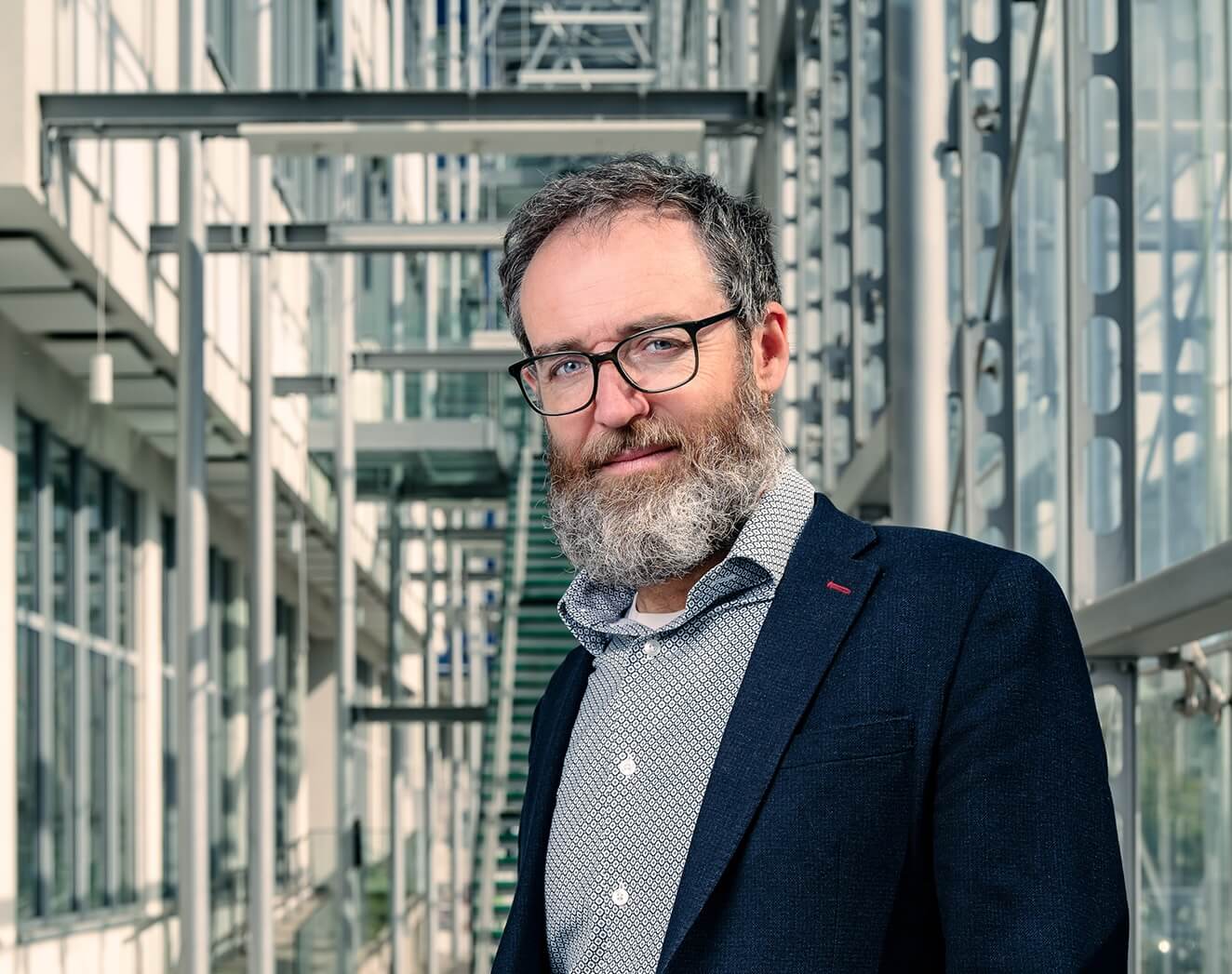
Prof. Vladimír Mařík talks about the need for strategic support for artificial intelligence and drones, which may be areas in which the Czech Republic has a chance to be among the world’s leaders. | Photo: VM archive
How large companies in this segment should the state support in your opinion? Large manufacturers? Or start-ups?
The whole idea of supporting start-ups is somewhat distorted in the Czech Republic. Start-ups in the American sense, which is what our vision is aimed at, make sense in Silicon Valley, where there is a surplus of investment money, but it doesn’t work that way here. There is not enough private capital to launch start-ups of global importance. Moreover, from my experience, I know that a start-up that starts here will eventually register in America or elsewhere under a different name in order to be closer to other investors and avoid the meaningless taxation that the government has introduced since this year (from January 1, 2025, an amendment to the Income Tax Act will be in effect, which abolished the unlimited exemption when selling shares or stocks after meeting the time test. Profit from the sale of securities or shares up to CZK 40 million per year is exempt, the part above CZK 40 million is taxed at a rate of 15% or 23% depending on the amount of the tax base – editor’s note). This drove many start-ups out of the Czech Republic. But fortunately, the government reversed course in time and from January 1, 2026, the old principles of taxation will return.
In the Czech Republic, we need to do this by providing appropriate and effective support for small and medium-sized companies, these are the pikes. And they are growing here. I can name Workswell, for example. 15 years ago, two students started a small start-up here to develop cameras for unmanned aircraft. Today, they employ 60 people, most of them our graduates, and they have 40 percent of the global market for software for processing images from drones for agricultural purposes. And such companies should be supported to gain 60 percent or more of the market.
“In the Czech Republic, we need to address this with appropriate and effective support for small and medium-sized companies, those are the big ones.”
Two years ago, I came to the Royal Research Institute in Bhutan and they showed me a drone for monitoring the icing of power lines in the mountains, which they bought in Singapore. And they said that it had the best software for their needs and that it was from a Czech company called Workswell. They asked if I knew it, that they would like to get in touch with them and communicate with them. My question is: Why is the drone from Singapore, why not from Pardubice? And the second question: Why don’t we sell more of the software there?
Because they don’t have any support? Because no one here is interested in it?
Yes, exactly. So back to your question. I believe that small and medium-sized companies that will stay here for the long term, or someone will buy them, but they won’t move out, they will pay taxes here.
We are helping America increase its lead
There is one more thing that probably no one has noticed yet. America is known to be ahead in research in a number of fields – but thanks to whom? In many cases, thanks to the people who sit in the Czech Republic, including in this building (CIIRC – ed. note) and in other buildings of the Czech Technical University. These are our people in the public research institution who work for American companies like Google or Microsoft as consultants. They are mostly people with high professional qualifications and great national awareness, they often returned from abroad to help the Czech Republic. But in the last three years, the state has reduced support for research in artificial intelligence so much that it simply does not pay for it. And they need to feed their families. The Czech Republic gets almost nothing from such a situation, the research results do not become the property of the state, we are just helping America increase its lead. And the state is silently watching.
Now the next wave is coming, and it’s the Chinese. They’re already going around here, picking people off and offering money for information. That’s counterproductive and dangerous. I deal with similar things on a weekly basis, we don’t want such “cooperation”.
We submitted proposals to the government on what we would need from the state in order to be able to participate in European competitions – for example, obtaining funds for co-financing, which I’ve already talked about. But nothing has changed. The Ministry of Education, through which we can draw crucial funds, apparently has other priorities. There is no money for top experts in AI.
The Ministry of Education, Youth and Sports, through which, among other things, European money is also distributed, but it is not the only source from which you can draw funds. They are allocated for grants by the Grant or Technology Agency.
Yes, but that is significantly less money than what goes through the ministry, where it is distributed without any expert opinions.
It works better with the Grant or Technology Agency. But there is another problem, and that is the extraordinary administrative complexity. We recently applied for a grant and the application we had to process is 490 pages long, with the description of the actual content of the project being a relatively small part. When applying for project grants in America, all applications longer than ten pages are rejected in advance.
CIIRC cooperation with industry
What is the main focus of CIIRC’s activities? Which companies do you cooperate with and what do you cooperate on?
Thanks to the National Center for Industry 4.0, we have managed to establish cooperation with three major companies in the Czech Republic, Škoda Auto, Siemens and T-Mobile. We cooperate on projects related to automation and programming. We develop systems that connect language models with internal data and documents of a specific company. We use internal knowledge and capabilities of generative AI for planning, scheduling and programming of production lines.
Do the companies themselves come up with the assignment?
Well, half of them do, but our engineers also propose some procedures that they then present to the companies.
We also have an entire department that deals with production technologies and digital twins across the entire industrial production. Essentially, it is about equipping machines with software so that they become smart machines capable of communicating with others. In other words, we deal with production processes, their IT addition and increase of quality and efficiency. We introduce new technologies to existing processes, an example of which is 3D printing or technology enabling the combination of different materials in different layers so that the material acquires new properties, for example, is stronger and maybe even cheaper.
The third area we focus on is robotization. We help its implementation in companies. Our recent specialty is a chain that links the processing of creating a 3D model of the manipulated product using visual information processing, using this 3D model to design the optimal robot gripper head and manufacturing this head by printing. The customer brings a new component, it is photographed by cameras and a digital model is created, on the basis of which the optimal robot gripper head for this new product is designed and printed. So, within a few hours of bringing the new product, you have an optimal gripper head for the robot that can be used immediately in series production.
This is definitely something that companies are interested in.
Yes, but you know what is weighing us down? We will develop a solution for one company that will pay for it. But there must be fifty companies that would want the solution. We do not have the capacity to implement everything to such an extent. We would need to find a medium-sized company or companies that would take this technology that we have developed, tested in one or two companies, and implement it in other companies.
Why is it a problem to find one?
It is not about the company, it is primarily about people and money. The leader of such a company should be someone with a technical education, ideally a PhD student, who will establish a company specifically for this and will continue to implement the technology in question. At the moment, we are looking for capital, sources of private money that would help such companies invest. It should not be a start-up that will be sold to America in three years. It should be a company that will operate here for a long time and bring something to the Czech Republic and Europe.
This is an area that I personally want to focus on – supporting the creation of companies that will stay in the Czech Republic and transfer proven technology to other companies.
How to get results into businesses
Many businesses don’t even know that such an option exists. Or they don’t even know that they might need something like this.
Yes, there are businesses that don’t even strive to somehow upgrade themselves and invest in new technologies. Instead, they call for greater involvement of Mongolians and Filipinos in production.
At the opposite end of the spectrum are businesses that invest, perhaps slowly, step by step, and find out what it brings them. They usually don’t need our help or they will specifically ask for it. We should focus on those businesses where there is a will to change something, but they don’t have enough money, courage or people to implement it. Here there is room especially for the already mentioned private capital. Private equity will help to get a company or companies moving and it will bring profit to everyone.
You have certainly heard that the Czech Republic is striving for the so-called AI Gigafactory, a large-capacity computing infrastructure of European importance, capable of training and deploying extremely large-scale artificial intelligence models. We look forward to creating an environment around this infrastructure for small and medium-sized companies that will be able to use computing capacity and artificial intelligence and – with the help of private capital – push them into the rest of the industry. And right now, in October 2025, we have received from the EU the AI Factory project for the Czech Republic, managed by VŠB TU Ostrava, which is a kind of first step, the first exercise towards a truly large European AI Gigafactory in the Czech Republic. We believe that funds will be found for co-financing from the Czech side for the first step.
How quickly and to what extent do you think artificial intelligence will change industrial companies in the coming years?
The overall change will be proportional to the investments that companies can make in it, as well as the courage of people to incorporate AI into production. But they cannot think that they will survive in the market without AI. We emphasize that companies should start testing artificial intelligence first on something simple, in diagnostics or in invoice processing, in order to break through the initial shyness. The easiest place to start is with office processes. The second area I see as very promising is production scheduling and planning. That’s where AI is a huge help, because AI systems are far better than the best operator.
“AI systems are far better than the best operator.”
Every company must also put together a certain core of people who will support AI and not see it as a threat.
Do universities educate enough people who are able to take on this? I know that you are calling for a reform of education, including higher education. At one conference, you used the analogy that reforming education is as difficult as moving a cemetery.
And that’s how it is. In many ways, education works the same as it did thirty years ago. I would say that at universities there are at most twenty percent of departments and institutes where they really want to move forward and strive to be in the European or world league.
The professional potential in schools exists, but it needs to be activated. It could be relatively easy if we give space to people’s initiative and adequately value their knowledge. Real leaders who care about Czech science and the Czech Republic must take decisive positions in schools, just as they do in businesses and politics. If we plant them there and direct them correctly, it will work.
 Prof. Ing. Vladimír Mařík, DrSc., dr.h.c., FEng., founder and scientific director of CIIRC at the Czech Technical University in Prague, is a graduate of the Czech Technical University FEL. He received his habilitation in 1984, and was appointed professor in 1990. From 1999 to 2013, he worked as the head of the Department of Cybernetics at the Czech Technical University FEL, which he founded. In 2013, he was the initiator of the establishment of CIIRC and its first director, and since 2017 he has been the scientific director. In addition, Prof. Mařík was the founder of the Rockwell Automation Research Center Prague (part of the American Rockwell Automation Inc.) in 1992, where he was the executive director until 2009. In 2010, he took over the position of Chairman of the Board of Directors of CertiCon, a company developing solutions for life-critical applications, which he held until 2025. Prof. Ing. Vladimír Mařík is the author or co-author of more than 160 journal and conference articles, co-author or editor of 20 books, and co-author of five US patents.
Contact
Next articles and interviews
Next articles and interviews
+ Show