Despite a number of challenges, domestic vehicle manufacturers managed to produce a total of 1,445,776 passenger cars in 2025. Despite a year-on-year decrease of 0.5%, they achieved the second best result in history. Bus production also achieved an extraordinary result with a total of 5,651 buses (+26%). The production of trailers over 3.5 t also performed well with a total number of 2,070 completed trailers and semi-trailers (+2.5%). On the other hand, a year-on-year decrease in production was recorded in the categories of small trailers up to 3.5 t with a number of 15,298 (-3.4%), trucks 1,349 (-11.4%) and motorcycles 692 (-23.9%). Production of electric passenger vehicles increased by 89% year-on-year to a total of 285,176 units, with pure battery and plug-in hybrid vehicles accounting for almost 20% of total production. Production of pure battery buses also increased by more than 57% to a total of 385 units.

“The year 2025 confirmed the extraordinary resilience and performance of the Czech automotive industry. More than 1.44 million passenger vehicles produced, record bus production and a number of successes of domestically produced models across European and global markets. These and other results clearly show that the Czech Republic remains one of the key manufacturing centers in Europe, even in times of rising costs, volatile demand and an uncertain global environment. Accelerating electrification was also a significant trend in 2025. The production of electric vehicles increased by almost 90% year-on-year, with every fifth vehicle produced having either a purely electric or plug-in hybrid drive. At the same time, the automotive industry continues to strongly support the Czech Republic’s export balance, with over 92.5% of passenger cars produced going to foreign markets. The performance of our plants and suppliers is clearly linked to the development of the European market and the impacts of European regulation. This is precisely why it remains essential for the European Union to proceed with currently being discussed, realistically revise the rules for decarbonizing vehicles. The key issue at the moment is not so much 2035, but 2030. There is already a dramatic discrepancy between regulatory requirements for the share of electric vehicles and real market absorption. In order to retain customers, the European Union must set decarbonization rules realistically, with greater flexibility and a technology-neutral approach that will allow for combining the electrification of drives with other solutions. To maintain the domestic industry, it is necessary to work on available energy, a sufficient number of qualified workers and the resilience of supply chains. If the Czech Republic manages to maintain a stable and predictable environment, I am convinced that the Czech automotive industry has all the prerequisites for further growth in 2026, not only in terms of production, but also in terms of innovation and long-term competitiveness,” says Martin Jahn, President of the Association of the Automotive Industry.
Passenger vehicles
In 2025, a total of 1,445,776 passenger vehicles were produced in the Czech Republic, i.e. 0.5% less year-on-year than in the previous year 2024. More than 92.5% of the cars produced (1,337,786 units) went to foreign markets. A total of 107,990 vehicles were placed on the domestic market, i.e. 7.5% of total production. A total of 285,176 electric cars were produced from January to December, and their share in domestic production increased by 9.3 percentage points year-on-year and represented 19.7% of total production. A total of 224,383 battery BEVs and 60,793 plug-in hybrid vehicles were produced. The electric vehicle segment thus recorded an increase of almost 89% year-on-year.
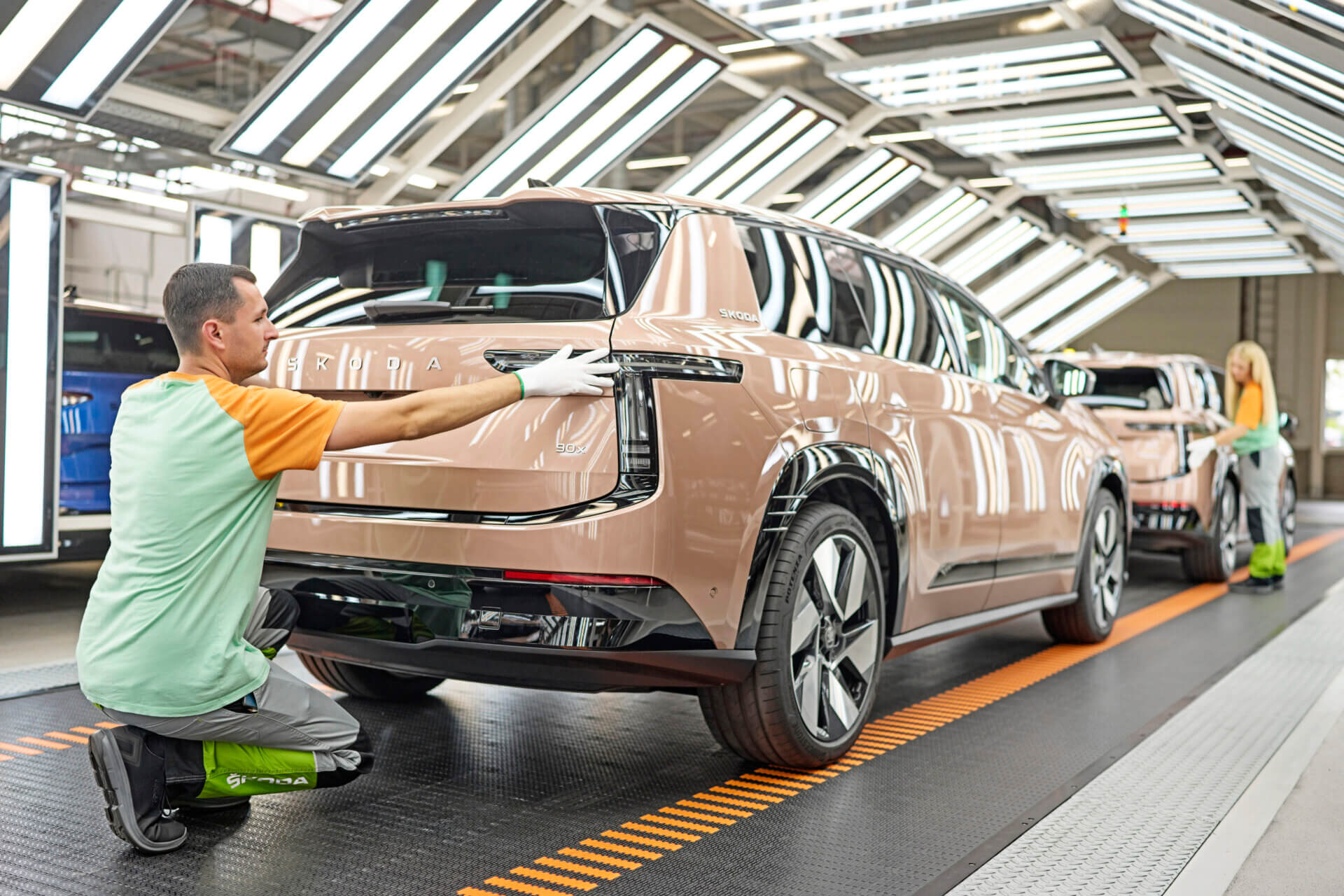
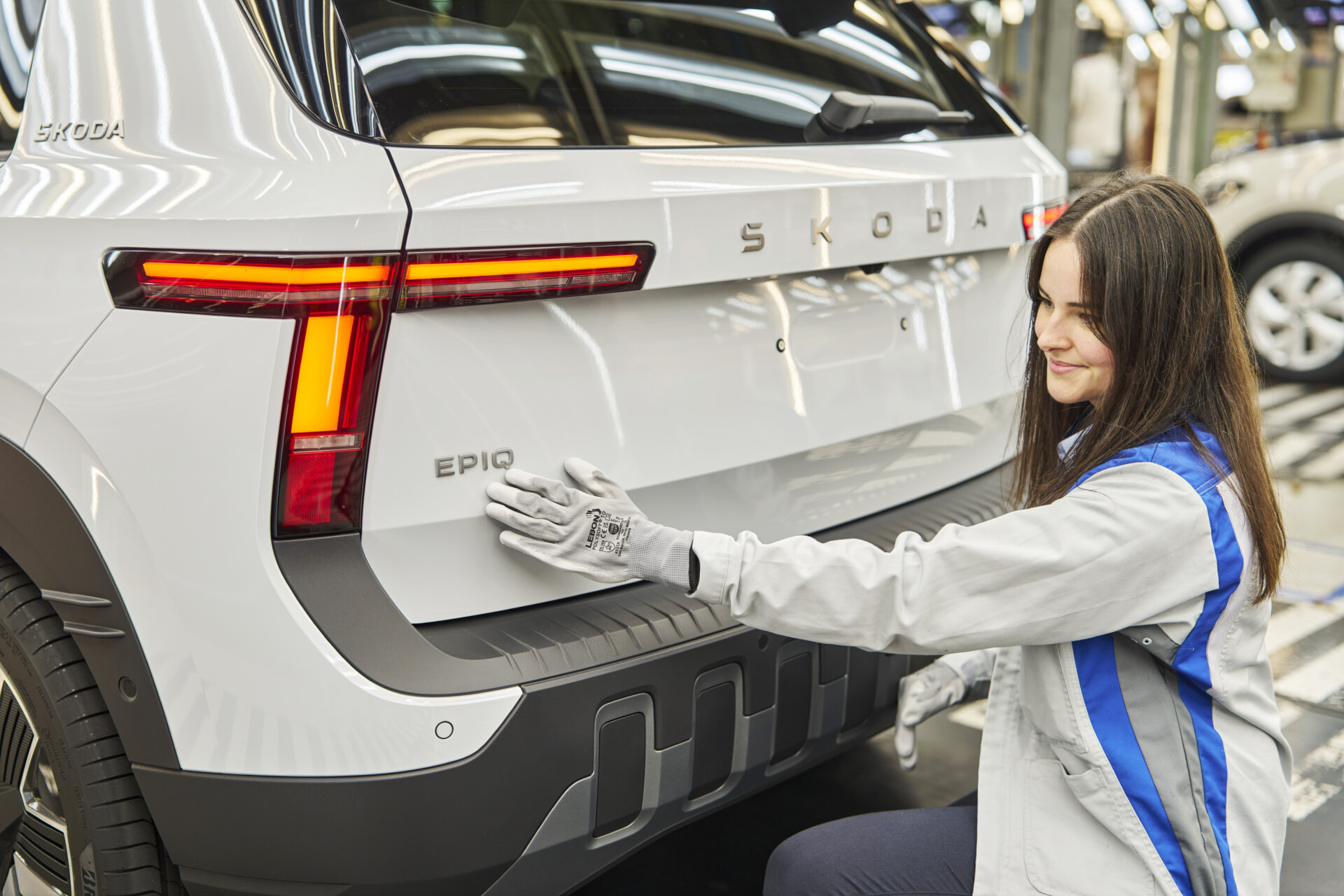
The largest domestic car manufacturer, Škoda Auto, which accounts for 65.5% of the total production of passenger cars in the Czech Republic, produced a total of 947,140 cars (+5.6%) in its domestic plants last year. 91,791 vehicles (9.7%) were placed on the domestic market, while 855,349 vehicles (90.3%) were sent to foreign markets. From January to December, the Mladá Boleslav car manufacturer produced 219,509 electric cars (BEV and PHEV), i.e. 23.2% of the brand’s total production. Of these, 189,386 were purely battery-powered vehicles and 30,123 were plug-in hybrid vehicles.
In the Nošovice plant of Hyundai Motor Manufacturing Czech, a total of 276,175 vehicles were produced in the twelve months of 2025, i.e. 16.5% less than in 2024. Production was mainly affected by lower demand in the second half of the year, on the other hand, more HEV models were produced than planned. Of the total number of vehicles produced, 34,997 had a purely electric and 30,670 had a plug-in hybrid drive. Overall, electric vehicles produced in Nošovice accounted for 23.8% of the brand’s total domestic production. Almost 95% (261,889 units) of the vehicles produced were destined for foreign markets, while the remaining 5%, i.e. 14,286 vehicles, were located domestically. The Korean automaker’s total production in the Czech Republic represents 19% of the share of passenger vehicles produced.
A total of 222,461 completed vehicles rolled off the production line of Toyota Motor Manufacturing Czech Republic in Kolín in 2025, which is 1.2% less than in the same period last year. However, production still exceeded the original plan thanks to higher demand. The Kolín manufacturer accounted for 15.5% of the total production of passenger vehicles in the Czech Republic. At the end of the year, it also successfully launched production of the hybrid version of the Aygo X Hybrid model and adopted a decision by the group’s headquarters on the future production of an electric vehicle at the Kolín plant. Of the total number of vehicles produced, over 99% (i.e. 220,548 units) were destined for foreign markets and less than 1% (i.e. 1,913 units) were destined for the Czech Republic. Since November 2025, only vehicles with hybrid drives have rolled off the Kolín production lines
Trucks
Tatra Trucks, the only truck manufacturer among the members of the Association of the Automotive Industry, produced a total of 1,349 trucks in 2025, statistically 11.4% less than last year. However, this year-on-year decrease is due to a change in the methodology for reporting production data, which means that from 2025 onwards only fully completed vehicles are counted, not, for example, “CKD sets” intended for assembly by the final manufacturer. Of the total number of trucks produced, 514 were registered in the Czech Republic (38%), the majority, 823 units (61%), were exported.
Buses
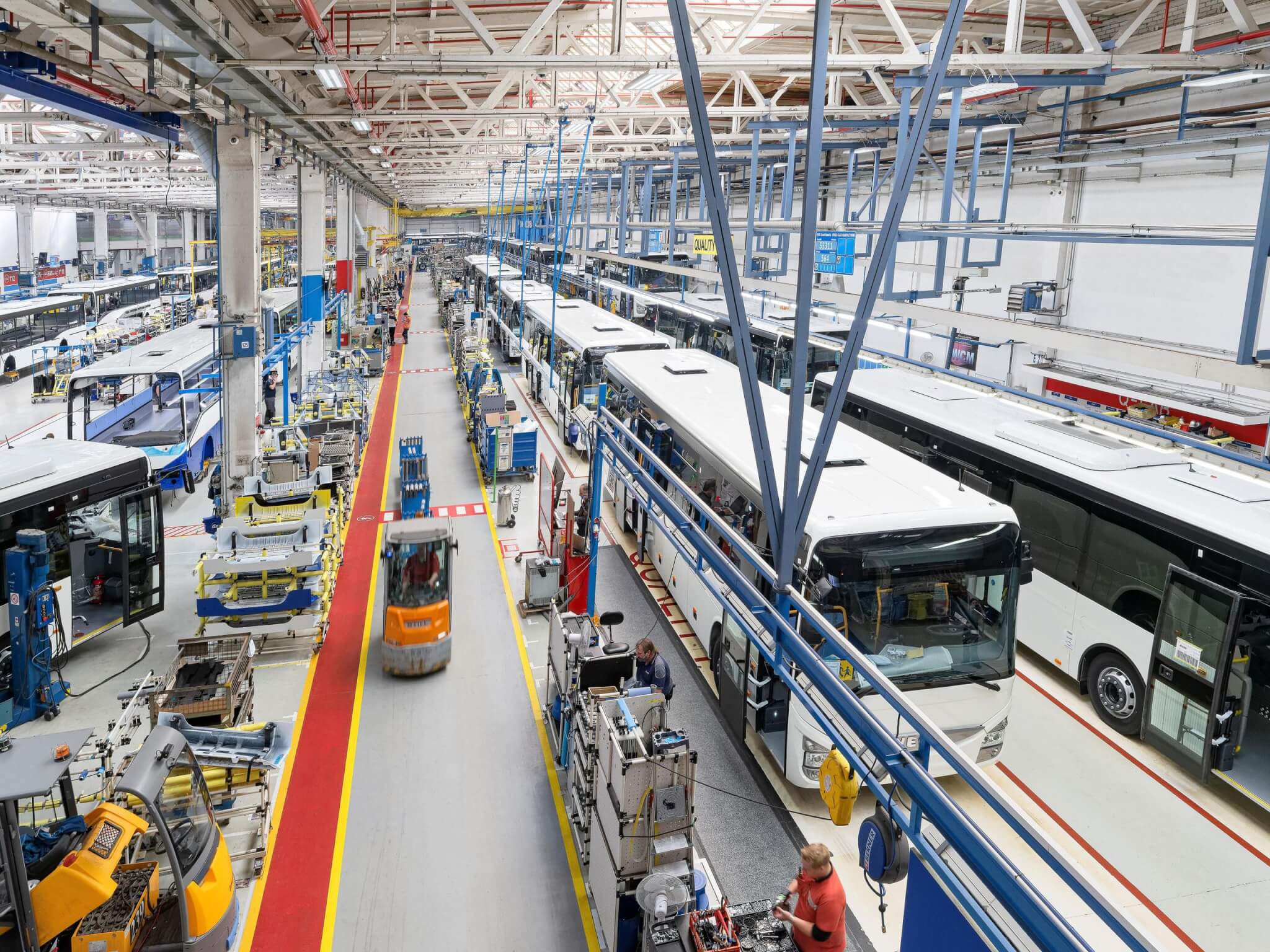
Bus production recorded a significant, almost 26% year-on-year increase in production. In the twelve months of the year, a total of 5,651 buses were produced in the Czech Republic, i.e. 1,162 more than in the same period last year. Of the total number of buses produced, 492 were intended for the domestic market (-45.3%) and 6,059 were for export (+23.1%). At Iveco CR in Vysokomyt, production set a new record. For the first time in its 130-year history, the threshold of 5,000 buses produced was broken – specifically 5,143. This is 27.3% more than last year. Another 160 buses were completed in built-up form at the sister plant in Foggia in Italy. The Libchavy SOR plant also recorded higher production results year-on-year, producing a total of 480 buses, 64 more than in 2024. More than 26% of production, i.e. 127 buses of this brand, were placed in the country, the remaining 74%, i.e. 353 buses were exported. On the other hand, a lower production trend was recorded by KHMC with a value of 28 minibuses produced, which it produced 3 fewer than in 2024. The segment of purely battery buses grew significantly, of which a total of 385 were produced from January to December, i.e. 140 electric buses and 52% more than last year. Most of them, i.e. 306 were produced in Iveco CR, the remaining 79 in SOR Libchavy.
Motorcycles
Traditional motorcycle manufacturer Jawa Moto reported a year-on-year decline in production of 217 motorcycles (-23.9%). In January-December 2025, a total of 692 motorcycles rolled off the domestic brand’s production line, of which 386 (55.8%) were destined for foreign markets and 306 (44.2%) were sold in the Czech Republic.
Trailers
In the trailer segment, a total of 17,368 trailers and semi-trailers were produced from January to December, i.e. 2.8% less year-on-year. The overall decline in the segment was mainly ensured by the company Agados, which mainly produces small trailers up to 3.5 t. In 2025, it produced a total of 15,298 of these, i.e. 3.4% less than in the previous year. In the Czech Republic, the brand sold 8,911 units (+6.7%). 5,875 units were exported (-17%). In the segment of large trailers over 3.5 t, Agados produced 2 units of trailers. The manufacturer in the segment of large trailers and semi-trailers, Panav, also recorded lower production year-on-year. It produced 479 units of large trailers in the Czech Republic (-2%). Of the total production, 401 units were sold domestically and 73 units were exported. On the other hand, higher year-on-year production results were recorded at Schwarzmüller, where a total of 1,589 trailers and semi-trailers were completed in 2025, i.e. 4% more than last year. Of the brand’s total production, 1,282 units were sent abroad and 277 units were sold domestically.
Contact