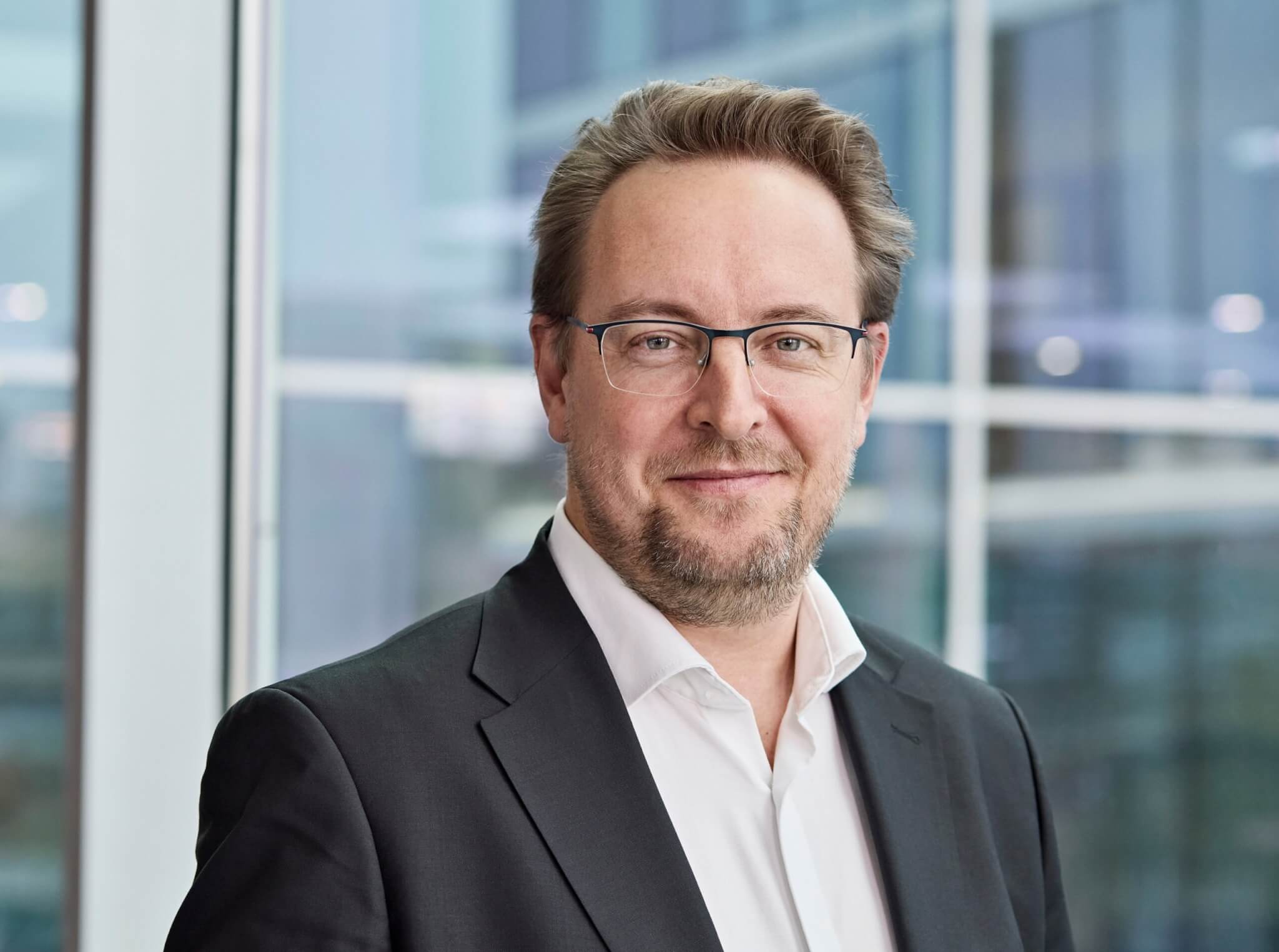
Perspectives on cooperation between industry and universities often overlap. Companies are looking for quick, concrete solutions, while academia works on longer research horizons. But it is precisely in this tension that significant potential lies: if both worlds can be connected, university research can fundamentally accelerate the technological shift of industry. Finding this balance is one of the key tasks of the new rector of the Czech Technical University, Michal Pěchouček, who wants to direct CTU to the top hundred technical universities in the world during his four-year mandate. Today, it is around 189th place.
Congratulations on your still more or less new position. How do you feel after four months as the rector of CTU?
The prevailing feeling is that it is really as big a job as I imagined. So, no big surprises really. I am glad that I have great people around me who are willing to build cathedrals with me. And I also have a good relationship with the deans, I think we are pulling together.
I have read some of your previous interviews and also your candidacy speech, but I have never found a complete answer to the question of what motivated you most to run for the position of rector. It occurred to me that it may be related to your previous work in the commercial sphere. That you found some gaps in the companies where you worked that could be filled by cooperation with the university. And so you decided to do something about it on the academic side. Is that right?
First of all, I must remind you that it was not a decision made overnight. I had already run for office eight years ago, but I was unsuccessful then. I decided to run for office at the moment when I was fundamentally convinced that I wanted to devote a certain part of my life to building a large European project. European and at the same time Czech. I have worked in international companies all my life and I realized that I would like to make a fundamental contribution to the benefit of the Czech Republic. And the opportunity to manage the oldest Czech and also the oldest European technical university was actually the answer to my ambition.
A university cannot be a closed sect
In your previous answer, I was interested when you said that you and your colleagues want to “build cathedrals”. Should a university be a cathedral? A temple of knowledge? That sounds very far removed from practical life to me. What do you think the role of a university in society should be?
By building a cathedral, I meant the implementation of a transgenerational project. When you build a cathedral, you are building something that will transcend you. Someone will take over from you and continue to build it. You will never see the cathedral built, but you have a grand vision and can imagine what it will look like in two hundred or three hundred years. That is what I meant. Of course, a university cannot be some sect detached from society, quite the opposite. It must be more interested in what the relevant problems of society are, what the industrial challenges are, so that it can meet them with its scientific and creative activities.
Should universities be the direct driving force of society, the bearer of progress? Or is that too much?
We certainly want a technical university to understand technological development better than companies, in other words, to be able to partly determine technical progress. And to become a good partner for industry thanks to this quality.
Do you generally see a connection between the quality of universities and the competitiveness of countries?
Certainly, the causality here is completely direct. Countries that have a high level of industrial competitiveness are also those that have the best universities in the world. Innovative startups are created precisely where there are top universities.
Opening a business depends on mutual understanding
When you succeeded as a candidate for rector, there was joy in business, including the automotive industry. You are certainly in touch with the heads of industrial companies, so do you have any idea what they expect from you, or rather from CTU under your leadership?
I am convinced that they were not happy because of me, but because of the university, or rather the senate, which made such a decision: it preferred a candidate with business experience to a career professor. This is a signal that business is important to the university, that it is opening up to it more. This is how I read it.
What specifically do you mean by opening up to business?
The basis is that the university is interested in business, that it is interested in its needs and wants to be its partner. But that alone is not enough. When a university knows what scientific challenges are important for industry, but essentially only wants money from business to finance its visions, then that is encapsulation – and that is wrong.
“The university should partly determine technical progress.”
So we all want to open a university, but as usual, the devil is in the details. The primary reason why cooperation fails is the fact that industry and universities have different innovation horizons. When an industrial company needs to solve something, it wants it right away, within three months, six months at most. But universities work in completely different cycles. They solve complex research and scientific problems that will be relevant in five to ten years, and they do not meet industry in this. Then it happens that company representatives feel that the university did not help them much and that people from within the company would have done it faster in the end. And they are right.
Why can’t qualified people at the university, who have all the materials for the project, solve the problem faster?
Because they are qualified to solve problems for several years. They need a research team, PhD students. Companies are certainly more qualified to solve short-term tasks.
So you want to teach people at the university to work faster?
Of course not, I will not adapt the university to the pace of short-term tasks from industry. That makes no sense.
So on the contrary, you will try to convince companies to think about what else useful, long-term, the university could do for them?
Exactly. Companies should want to use the university differently. For example, it can show them where research on the technologies they use is going and allow them to adapt their technological plans to it or even skip a stage in development. This is what technologists in California with UC Berkeley and Stanford University are doing. Nobody goes to UC Berkeley with a component to have it fixed because they know it would be a waste of the time of the people at the university. They are not concerned with the present, but with the future.
Today, companies do not want any long-term perspective from CTU?
I think that awareness is not yet there in the Czech Republic. Czech industry sees possibilities for cooperation in solving short-term problems and, for example, in testing. But there are some cases of long-term partnerships with industry. For example, we have been cooperating with the Belgian Toyota for about 15 years. Jiří Matas, an internationally respected famous professor in the field of computer vision, leads the CTU research team cooperating with Toyota on the development of machine vision for cars. CTU allows Toyota to see into the future, and Toyota pays the university considerable sums for this. Another thing that industry must understand is that the value of CTU in technological cooperation is not the students, but the professors. They have some unique knowledge and the greatest benefit comes from them for companies.
Do you have any other examples of similar long-term cooperation?
The partnership with Adobe also has the character of visionary development. A group of people at the university cooperates with a company on computer graphics. We also have scientists who cooperate with the biochemical industry.
CTU is unique in many fields
How do you want to get more projects like this? By meeting companies and presenting CTU’s opportunities?
Yes, my job is to be able to explain it to companies. The fact that industry doesn’t see these opportunities today is not its fault, it’s CTU’s fault. I want to create something like a marketing strategy, collect the most interesting things that are being done at the university and that may be relevant to industry, and present them to companies.

CTU is the hegemon in AI in the Czech Republic, we have several famous laboratories here that have been doing AI for thirty years. | Photo: Pavel Šinagl
Do you already have an overview in which areas it could be?
CTU is unique in Europe and the world in several areas. That key area is nuclear research. We have three reactors on campus, almost nobody has that. We are already cooperating with CEZ in the field of small modular reactors, this is a strategic direction for us. The Faculty of Nuclear and Physical Engineering has the potential to develop broad industrial cooperation. Then it’s artificial intelligence. CTU is the hegemon in AI in the Czech Republic, we have several famous laboratories here that have been doing AI for thirty years.
What do you mean by “doing”?
They develop algorithms, technologies, models. Not as a custom activity, but research. Ninety percent of the work at CTU is open scientific work, which is financed by public money, European or Czech, and ensures progress in knowledge in the field of artificial intelligence. Our scientists are respected in the world precisely because of the thirty years they have devoted themselves to this. I have already mentioned Professor Matas, who was thus sought out by Toyota.
“We will support CTU employees and students to establish start-ups. We want to support twenty of them a year.”
Is there another area where CTU excels and can help industry?
The third major topic is defense research. Here too, we have a long tradition, there are scientists who have been working with various defense agencies and defense industry suppliers for many years. The fourth strategic direction in which we want to develop is sustainable construction. Our Faculty of Civil Engineering and the Institute of Energy-Efficient Buildings are already achieving very good results.
If companies understand how CTU could be useful to them, could it play a more significant role in the transformation of industry?
Certainly yes. I am fundamentally convinced that this is one of the few hopes for how industry can be intelligently transformed. It will not all happen in one wave, it will be more gradual, with a change in the style of work. In addition, the Czech Republic has the advantage that we have already talked about – that there are dozens of top people at CTU who are dedicated to artificial intelligence. This will also play an important role in industry.
Experience in a start-up environment is useful
So far, we are talking more or less only about the cooperation of your scientists with big industry. What about spin-offs and start-ups, is that not a topic for you?
Of course, yes, that is the second possible way of cooperation. We will support CTU employees and students to establish start-ups. I deliberately say employees, because even a professor can decide at a certain stage of his career to establish a start-up. Our ambition is to establish or support 20 start-ups a year.
What will that support consist of? Probably not in financing them.
You are right, CTU is not and will not be a financial investor, but it can offer legal certainty and create a suitable environment, an incubator, where it will be possible to share knowledge. We also want to attract former successful start-ups to CTU. In this context, it may be interesting that this is the first time that a university is managed by start-up founders. I have personally founded several start-ups and have been lucky with exits. My vice-rector for entrepreneurship and technology transfer, Jakub Nešetřil, is also a former start-up founder. So we have experience and the idea of how the school should work in this regard is inherently our own. As for funding, it can be assumed that by encouraging people to found start-ups, CTU will become interesting for venture capital. I was recently in Munich, where they have the largest and most successful start-up incubator in Europe. It is affiliated with the Technical University and generates 140 start-ups a year, in total they take care of 650 start-ups there. He is my great role model.
Will AI eat us?
We’ve already mentioned AI, so let’s go into it in a little more detail. Do you generally agree that the advent of artificial intelligence is a dramatic intervention that will completely and forever change the job market?
Yes, the impact on the job market will be massive. In the United States, fifty percent of software engineering graduates are already unemployed. There are professions that will be spared, but most of the intellectual ones will not be. It cannot be avoided. In the Czech Republic, we don’t really accept it yet, because the unemployment rate is still very low here. But in my opinion, society should prepare employees for it so that they can retrain as soon as possible for the jobs of the future. It won’t be easy.
That’s one view of AI, one risk. Then there’s another, and that concerns security. I know you’re one of the people who warn against AI if it’s not regulated. What are your concerns and what should that regulation look like?
I don’t like that resistance to AI regulation is becoming a political issue. It makes no sense at all. Food, medicine, car production are regulated – so why not artificial intelligence? We don’t know how medicines are made, but we’ll take them because they go through some regulation. We don’t understand artificial intelligence either and leave it unregulated? I would like to be sure that AI won’t “tempt” us, that if I give ChatGPT to my children, for example, that it won’t appear anywhere in their communication, that they should jump under a train.
Development is moving forward very quickly, isn’t AI already living a life of its own? Can it still be monitored somehow?
Yes. Since AI is not regulated, it is like it has been taken off the chain and we don’t know what it will do in the future. All the more so, we must do everything we can to be able to regulate it. The greatest risks lie in cybersecurity. The American technology company Anthropic has developed the Mythos model, which is capable of putting any corporation in the world out of operation, for example, dismantling Volkswagen into prime numbers. Anthropic came up with this because it is concerned that someone else, states or criminal groups, will develop such a powerful model in secret. It therefore provides it to large companies like Microsoft or Apple so that they have at least a few months’ head start and can prepare. Mythos serves as a simulator of the worst possible attacker.
So it is not AI itself that will harm us, but its misuse?
Yes. I don’t think that artificial intelligence itself will “eat” us, but that AI will harm us by being misused in human hands. I don’t believe that it would be the will of AI itself. Well, not yet. As the world-famous British physicist Stephen Hawking said, AI may one day rebel against humans. It cannot be considered impossible, but in my opinion, we humans will harm ourselves first, through artificial intelligence. But I want to be optimistic, I think that artificial intelligence can help us in many ways. If we understand it and come up with some regulation quickly, it will work in our favor.
Are you working at CTU on any security elements in the field of cyber security, respectively AI safety security?
CTU has a long tradition in the field of cyber security. There are departments that are engaged in researching the properties of models, detecting risks of misuse and creating algorithms and technologies that can protect us. We do such research here.
How will AI change industrial enterprises? How will it change transport? When will most vehicles on the roads be autonomous?
Ten years ago, I believed that autonomous vehicles would be commonplace by now, because in a way it is a solved problem. But nothing like that has happened. This example clearly shows that technological development alone is not enough. There must also be a suitable economic climate that will allow technologies to be deployed. But I believe that all of this will happen, even if it has been a little delayed. I believe in a large degree of autonomy in production. I think that there will be an increase in “black factories” where there may not even be lights because robots do not need to see. I think that we, together with Germany, should be world leaders in this. And that brings me back to the university, because without collaboration with scientists at the university, things like autonomous factories cannot be achieved.
Cooperation with prestigious universities is key
You have been in office for four months, that is not a long time, but what have you already achieved?
I consider it a great success that we announced the CTU Starting program. We have allocated 50 million crowns from the budget to support ten new research groups that will be founded here by people returning from abroad. It can be basically anyone who has a doctorate in a field that is at CTU, people who have studied or worked abroad, scientists, professors, Czechs, foreigners. We have about a hundred perfect candidates on the shortlist.
What do you expect from this?
First of all, reducing academic inbreeding is a fundamental problem. Czech universities are mostly built on the talent of people who studied in the Czech Republic and have experience from only one university. A quality university must bring together people who have diverse experience. And we need to increase this diversity here.
Any other successes?
I have negotiated accession talks to the EuroTech Alliance (a strategic partnership of leading European technical universities focused on research, education and innovation, founded in 2011 – editor’s note), which brings together the Technical University of Denmark, École polytechnique fédérale de Lausanne, Institut Polytechnique de Paris, Technion – Israel Institute of Technology, Eindhoven University of Technology and Technical University of Munich. I consider CTU’s accession to this elite group to be absolutely crucial for future success.
How do the universities in the alliance cooperate?
For example, students from participating schools can register for online courses from the catalogs of partner universities. But for me as the rector, what is most important is that we will do joint projects and solve real challenges from practice assigned by industrial partners. This is a prerequisite for increasing our success in obtaining European funding.
That sounds good, anything else?
In addition, I have a great team of vice-rectors, half of whom come from CTU and half from outside the university. They are all new and came out of an open call. I think most academics support me. This is not some arrogance on my part, but I proceed from the belief that I am doing the right thing and that everyone ultimately wants to do the right thing.
“CTU is better than 99 percent of American universities.”
What would you like to achieve during your four-year term? Where should CTU be in four years?
I would like to increase the attractiveness of the school by providing more relevant education, I would like CTU to be the school of first choice for both students and professors, and for CTU to be more open to foreigners. And also for it to be shown in those four years that CTU is useful for industry, that the number of joint projects with industry will increase exponentially, and that the structure of university funding will also change and dependence on public budgets will decrease. In four years, it should already be clear that we are on a trajectory to reach the top hundred technical universities in the world. We will definitely not be there in four years, but we will see if we are getting there. Today we are in 189th place.
Let’s compare ourselves within Europe
One of the criteria for measuring the success of universities is the number of publications. Is that correct? How much weight do you attach to it?
The quality of a school can certainly be recognized by measurable metrics of the quality of creative work, that is indisputable. If you do not do science, research and technical creative work, you degenerate to the level of a “fachschule”. A university is supposed to bring students top-notch knowledge that it acquires through its scientific work. Scientific work is the basis for further innovation. Personally, I am convinced that the success of a university lies equally in how useful it is to society, which is proportional to how much money it draws from industry, as well as in the quality of its publications.
Is there a country or university that you take as a role model?
Good examples for me are the Swiss ETH Zurich and the Technical University of Munich. We have a number of partnerships with the University of Munich and we also have a friendly relationship. But I always say that the way to Munich goes through Dresden. The Technical University in Dresden is also inspiring, among other things because it has the same post-communist history as the Czech Technical University – the difference is that the Dresden Technical University is in the top hundred, we are not there.
Is there any point in comparing yourself with top American and British universities?
I have spent a large part of my life in cooperation with the United States and I wonder what the point of such a comparison with American universities would be. I think that the Czech Technical University is better than ninety-nine percent of American universities. If you look at MIT (Massachusetts Institute of Technology – a private research university in Cambridge, which has long been considered the best technical university in the world – ed.), they pay 80 thousand dollars per semester and it is a completely different world. I can be inspired by some particularities there and establish cooperation, but for the development of CTU, the most strategic thing is to succeed in that European region and carry the glory of old European techniques, such as Munich, Zurich or Imperial College London.
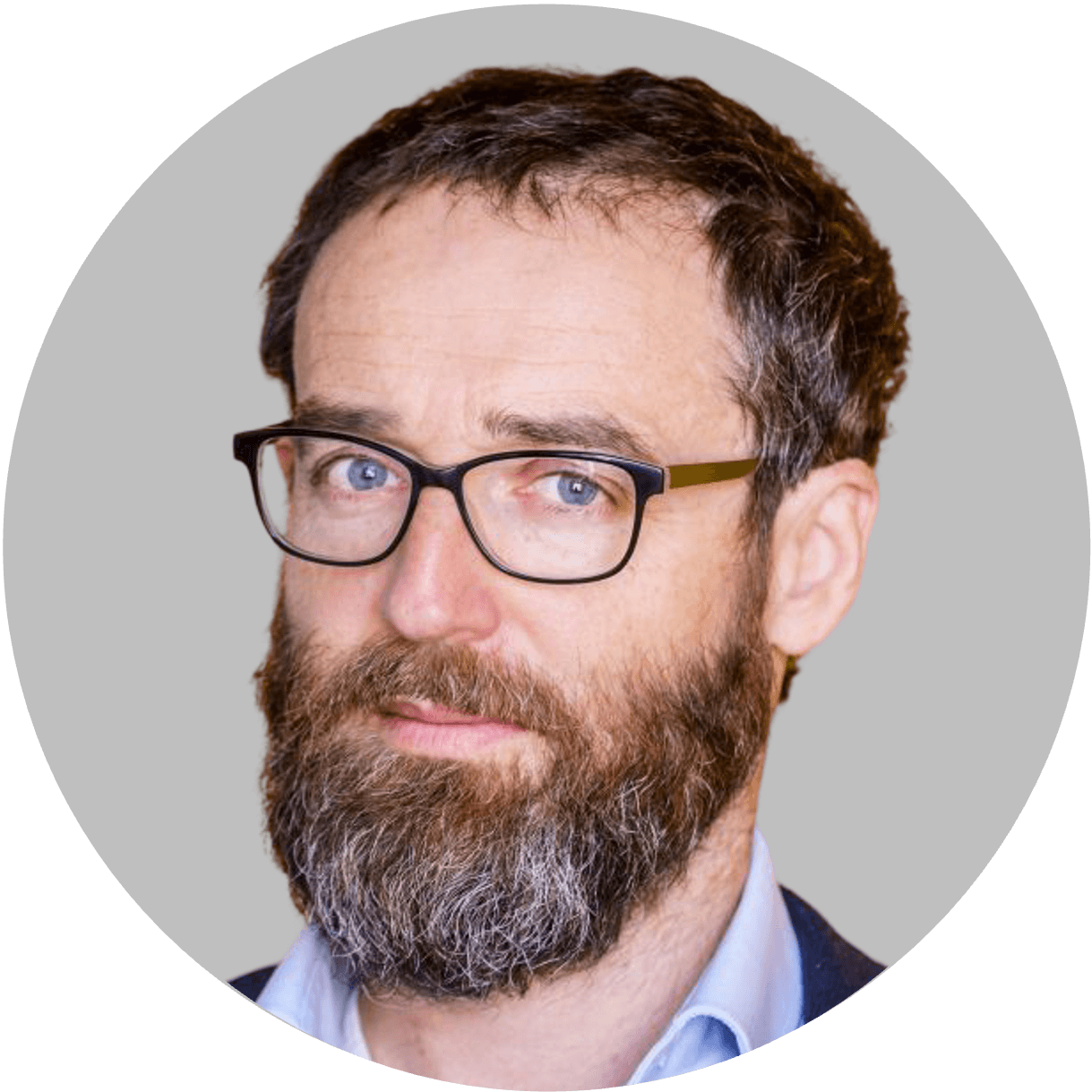
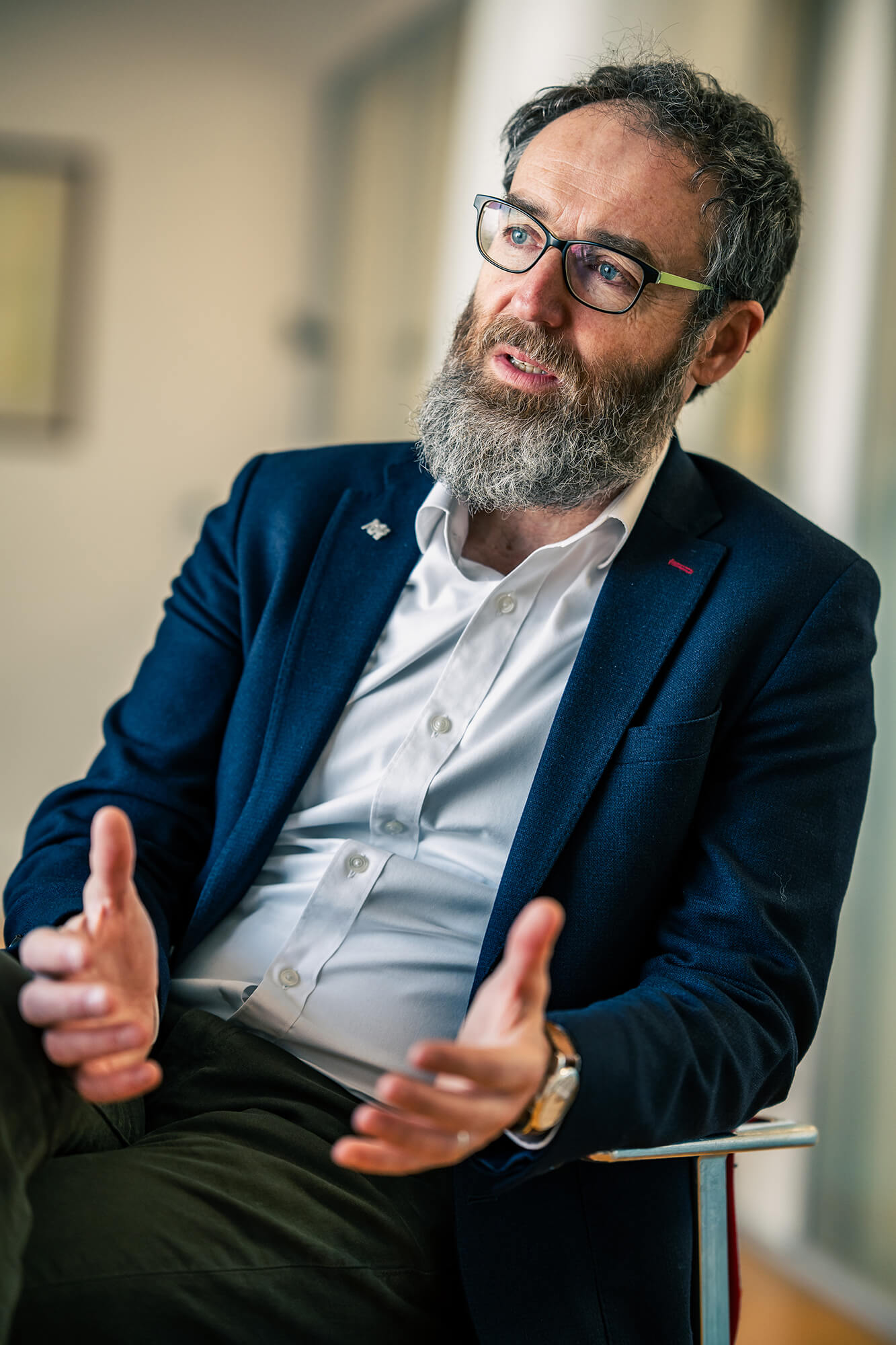
Prof. Ing. Michal Pěchouček, MSc., Ph.D., graduated in electrical engineering from the Czech Technical University, where he subsequently completed his doctoral studies in the field of artificial intelligence and cybernetics. During his academic career, he completed research stays abroad, including in the United States and Great Britain. He has been working professionally at the Czech Technical University for a long time, especially at the Faculty of Electrical Engineering. He participated in the establishment of the CIIRC of the Czech Technical University, where he devoted himself to applied research in the field of artificial intelligence, robotics and industrial systems. In addition to his academic activities, he participated in the establishment of technological startups focused on artificial intelligence. These include, for example, Cognitive Security, which focused on the use of AI in the field of cybersecurity and was later acquired by Cisco Systems. Another project is Blindspot Solutions, which focuses on data analysis and machine learning applications in industry. At the same time, he collaborated with technology and industrial companies, especially IBM and Honeywell, where he participated in projects using AI in practice, for example in the management of complex systems and process optimization. Since February 2026, he has been the rector of the Czech Technical University in Prague.
Contact
Next articles and interviews
Next articles and interviews
+ Show