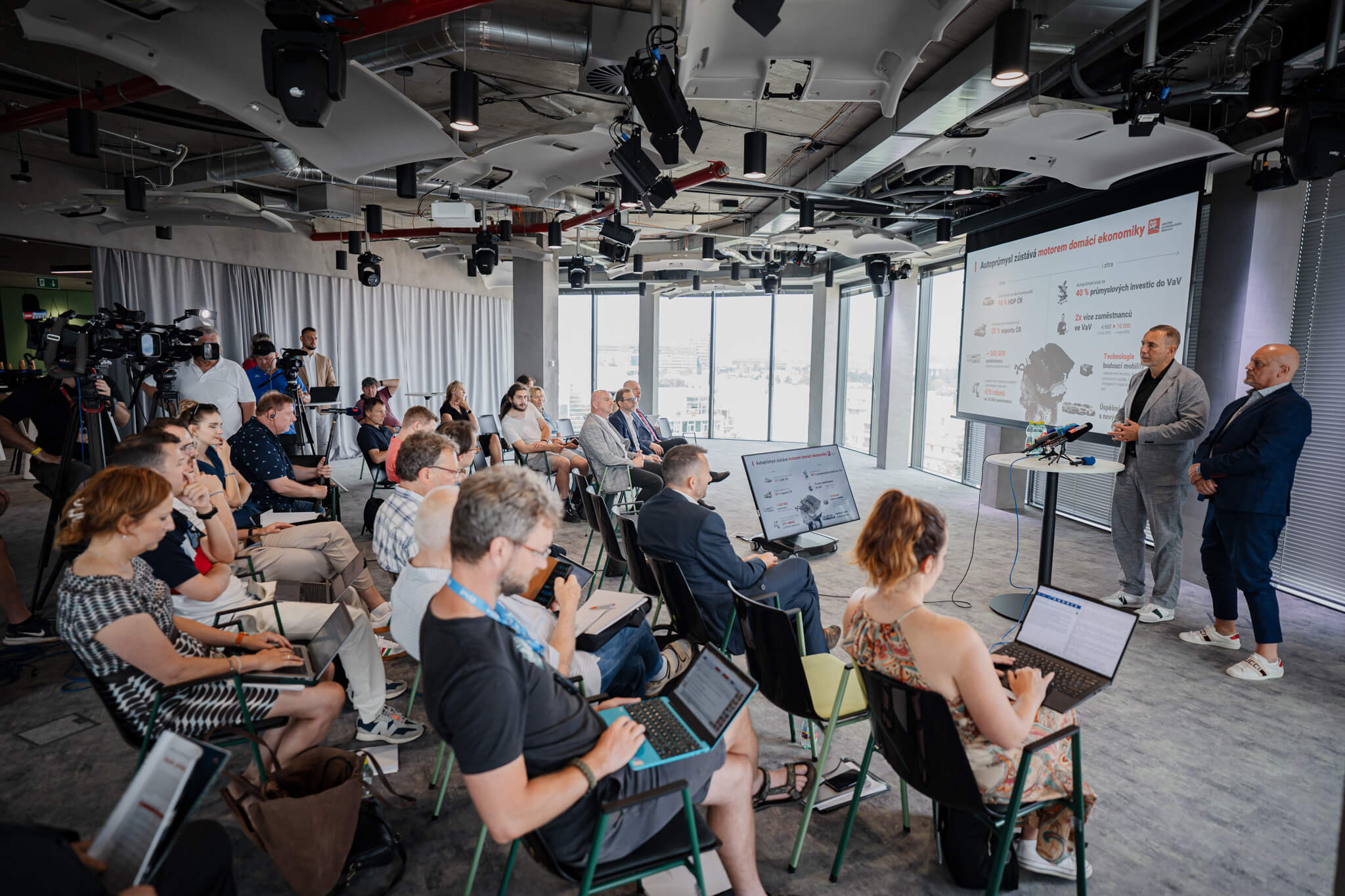
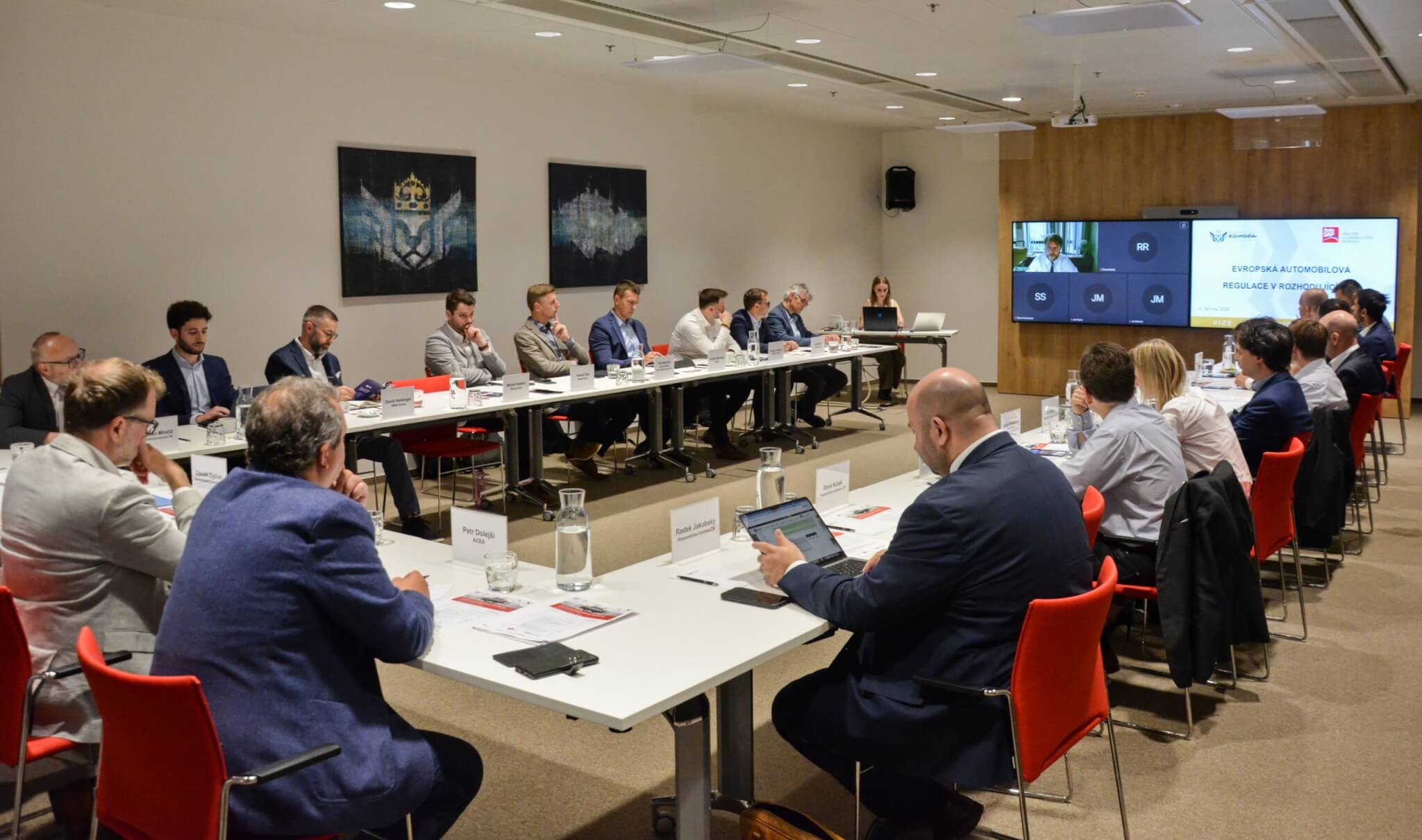
The General Meeting of the Automotive Industry Association, which took place this year at Škoda Auto in Mladá Boleslav, once again confirmed the stability and continuity of the leadership of the most important industrial sector in the Czech Republic. The Association members re-elected Martin Jahn as President of AutoSAP. The meeting also focused on discussing the priorities of the new government’s industrial policy, the impact of artificial intelligence on industrial practice, the elections of other Association bodies and the expansion of the membership base.
Martin Jahn, re-elected President of the Association of the Automotive Industry, said: “I take the strong mandate as a commitment to further strengthen the competitiveness of the Czech automotive industry. This year, we grew in production, companies achieved excellent results and the sector repeatedly confirmed its resilience. I will continue to promote realistic climate goals, the completion of the Euro 7 standard, but also more affordable energy, less administration and better access to foreign workers. Strengthening the area of research and technical development is also important to me. Next year, we will again face a number of ongoing challenges – the pressure of Chinese competition, the discrepancy between the legislative and market reality of CO2 and trade tensions between the USA and China. However, the Czech automotive industry has a clear strategy on which we will continue to build together and build on our successes to date.”
In addition to the re-election of Martin Jahn as President of the Association, other members were also elected to the AutoSAP bodies. Petr Michník from Hyundai Motor Manufacturing Czech became a newly elected member of the Board of Directors. Jiří Socha from TÜV SÜD Czech defended his position as a member of the Board of Directors. Ivo Juřička from Ferona and Tomáš Pavlík from QPAG were re-elected to the Supervisory Board. After several years of service on the Board of Directors, Petr Ostrý from Agados, spol. s r.o. said goodbye to this role, whom the members of the Association thanked for his many years of work and significant contribution.
One of the main points of the program was the speech of Karel Havlíček, vice-chairman of the ANO movement and nominee for Minister of Industry and Trade, who presented the main priorities of the future government’s industrial policy. He emphasized that economic growth must come from the private sector, while the role of the state is to create stable, fair and predictable conditions for business. He included energy, transport, education, raw material security and the defense sector among the key areas. In the area of energy, he emphasized the need for a rapid reduction in the regulated component of the electricity price, modernization of networks, development of nuclear energy and adjustments to the emission allowance system, which today significantly increase the costs of industry. He also paid attention to improving the investment environment through tax instruments instead of subsidies, supporting research and development, strengthening technical and dual education, faster employment of foreign workers and simplifying construction management.
Artificial intelligence and industry-academia collaboration
The speech by Michal Pěchouček, the future rector of the Czech Technical University in Prague, also received a strong response, focusing on the rapid development of artificial intelligence and its impact on the digital transformation of industry. He pointed out that AI is becoming a key factor in the productivity and competitiveness of companies, but at the same time it brings new security risks, especially in the area of cyber threats. He emphasized that the Czech Republic has significant potential to use artificial intelligence in areas such as manufacturing, cybersecurity, healthcare and the defense industry, and to develop specialized, internationally applicable solutions. According to him, closer and systematic cooperation between industry and universities is essential to fulfill this potential, through joint research, industrial doctorates and support for the creation of technological startups that can accelerate the digital transformation of Czech industry.
From Czech Republic to Tech Republic
The topics of competitiveness, education and technological transformation were followed by a presentation by Tomáš Prášek from Škoda Auto, who presented the initiative From Czech Republic to Tech Republic. The project responds to the long-term shortage of technically educated workers and seeks to systematically support technical education in primary and secondary schools. The aim of the initiative is to develop the technical and technological literacy of the young generation, strengthen interest in technical fields and thus create the necessary human foundation for future innovations, digital transformation and long-term competitiveness of Czech industry.
AutoSAP membership expanded in 2025
The General Meeting also included the introduction of new members of the Automotive Industry Association. AutoSAP was pleased to welcome Adastra, ADMASYS CZ, AutoForm Engineering Czech Republic, BMW Czech Republic, Dassault Systemes Czech Republic, Detail CZ, Kistler Eastern Europe and OKULA Nýrsko. The expansion of the membership base confirms the growing attractiveness of the Association and its role as a platform connecting manufacturing companies, technology suppliers and providers of cutting-edge industrial solutions.
The AutoSAP 2025 General Meeting once again showed that the Czech automotive industry has strong leadership, a clear strategy and the ability to jointly respond to the technological, economic and geopolitical challenges that the next period brings.
Photogallery